
The best approach for 2026 AI search involves SEO automation software to manage routine tasks, letting human experts focus on strategic elements that truly build authority and drive organic impressions. This shift from manual effort to intelligent systems is not optional; it is the new baseline for survival and growth.
| Product Type | Best For | Starting Price |
|---|---|---|
| All-in-One Automation | Comprehensive Needs | Varies |
| Technical SEO Specialists | Site Health & Performance | Custom |
| Content Intelligence Engines | Topical Authority & Relevance | Variable |
If you are still trying to scale content by manual keyword research and repetitive on-page adjustments, you are already losing to AI-powered competitors. The Helpful Content Update wasn’t a warning; it was a baseline shift. Manual SEO efforts simply cannot keep pace with the iterative demands of AI search environments.
By the end of this guide, you will know exactly which SEO automation software fits your specific business model and scales your organic impressions.
Why SEO automation is mandatory in 2026
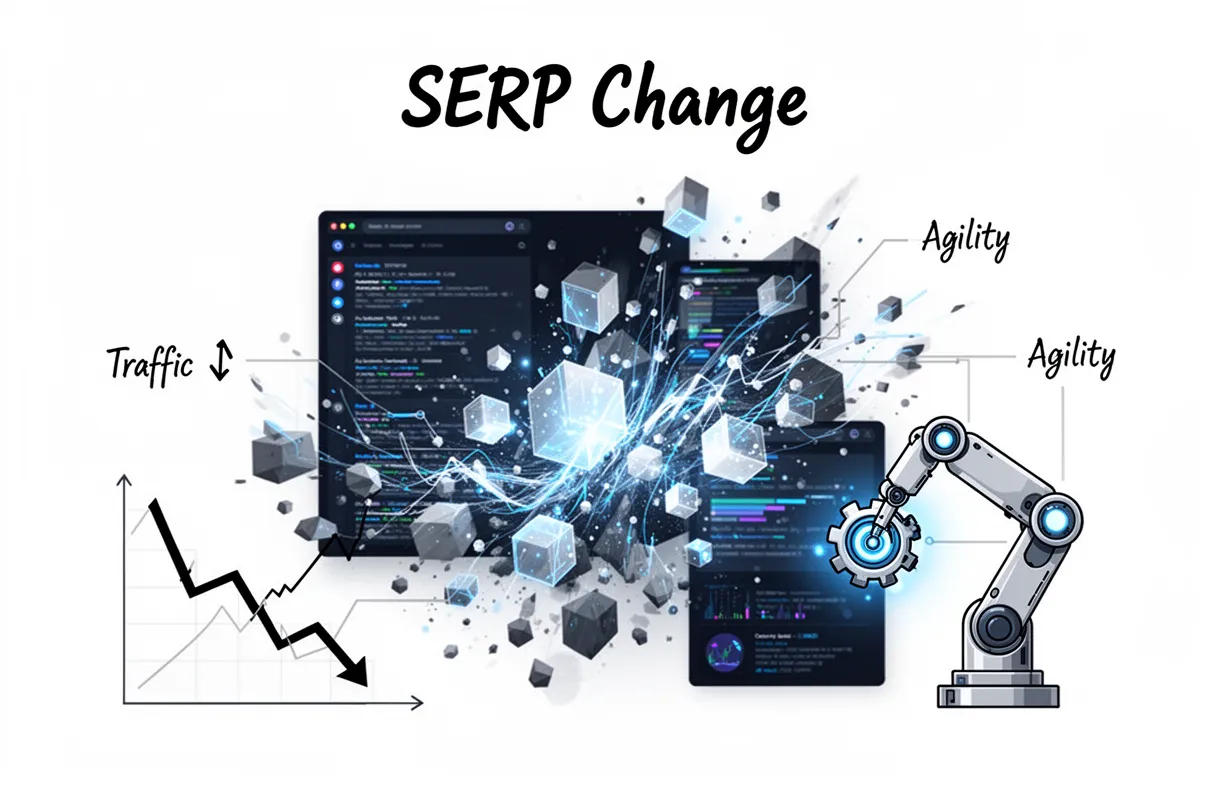
Automation isn’t merely an advantage anymore; it’s a fundamental requirement for navigating the volatile 2026 search landscape. The SERP is rapidly changing as of January 2026, demanding that brands achieve significantly more with the same time and resources.
This evolution extends beyond simple ranking shifts. We’ve observed constant algorithm changes since late 2023, particularly impacting sites that lacked clear topical authority or demonstrated superficial content depth.
The Helpful Content Update was a major turning point, initiating widespread traffic declines for both established corporate brands and nimble solopreneurs alike. It wasn’t just about penalizing bad content; it recalibrated what “helpful” truly meant to AI.
Many traditional SEO methods are failing in the face of these rapid AI updates, making static keyword targeting and manual content audits largely obsolete. The sheer volume of data and the speed of search engine iterations overwhelm any purely manual strategy.
Staying agile requires systems that adapt in real-time. We see automation as the only sustainable answer to these persistent pressures.
Ranking on more than just Google
Visibility now extends far beyond Google’s traditional search results; you must capture attention across an evolving ecosystem of AI search engines and large language models (LLMs). This means appearing in places like Perplexity’s answer snippets and within direct responses generated by ChatGPT.
Our internal data shows a clear trend: sites structured for machine consumption, not just human readability, win this new battle.
This isn’t about gaming an algorithm. It is about presenting your brand’s expertise in a format that AI can readily digest and synthesize.
Traditionally, SEO focused on indexing your content for web crawlers. But LLMs like ChatGPT access, understand, and then re-present information in a fundamentally different way. This shift changes what “showing up” truly means for your brand.
Automated SEO tools bridge this gap. They structure your content, metadata, and even your internal linking in ways that optimize for both classic SERPs and these newer AI models. It is how we ensure your valuable insights aren’t just buried on a webpage but actively contribute to the answers people get from conversational AI.
You need tools that understand the nuances of semantic relevance and entity recognition, not just keyword density. This is crucial for dominating AI search visibility and answer engine optimization. Otherwise, your content exists, but remains invisible to the fastest-growing segment of information discovery.
We find that many brands still rely on manual checks for basic on-page factors. That won’t cut it when Perplexity is scraping and summarizing at scale. Automation delivers the real-time adjustments necessary to stay relevant.
It means your content will show up where people are actually finding answers.
How to choose the right SEO automation tool
Choosing the right SEO automation tool means looking beyond feature lists and focusing on how it fits into your daily operations. A tool’s real value comes from its seamless integration and how easily your team can adopt it.
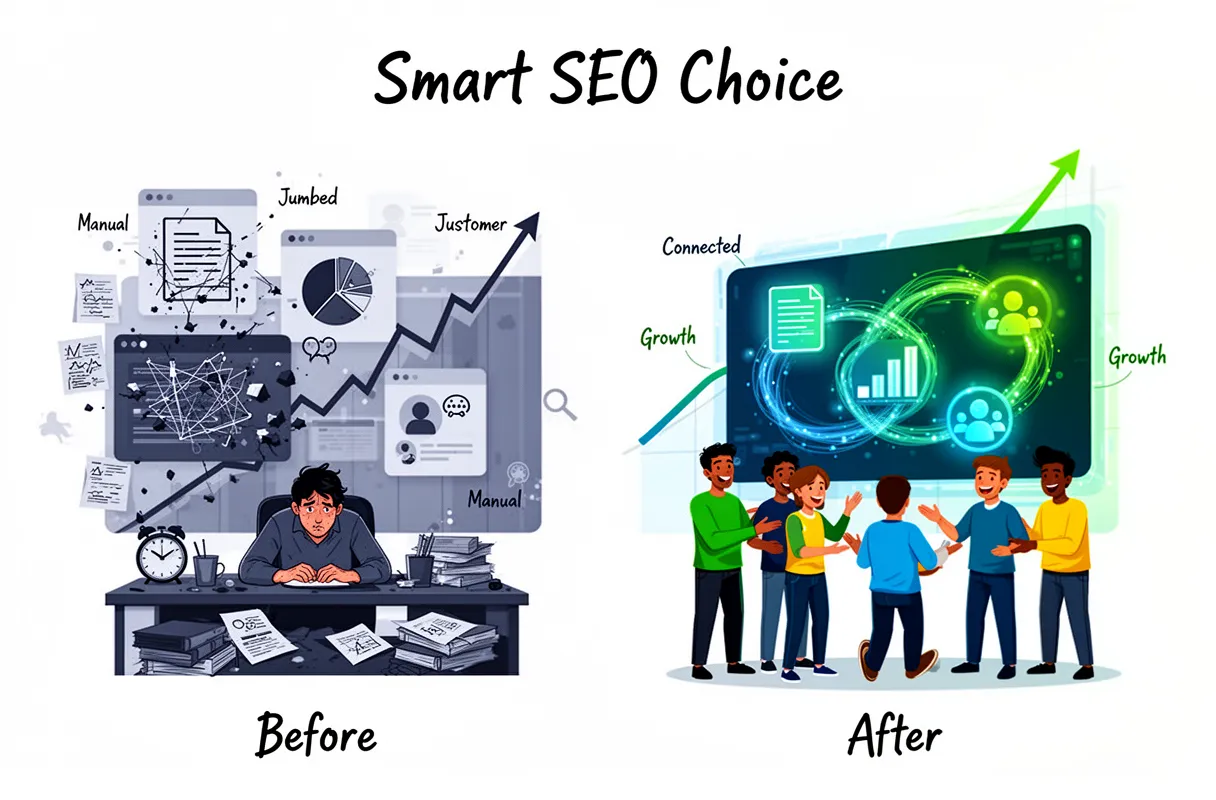
You need a platform that connects directly with your existing technology stack. Think about your CMS (content management system), your analytics dashboards, and especially your CRM (customer relationship management). Data silos kill efficiency.
An SEO tool sitting alone, disconnected from your operational tools, generates more work than it saves. It becomes another platform you have to manually update or extract data from.
True automation centralizes your efforts, providing a single source of truth for your SEO performance and customer journey insights.
We’ve seen clients struggle when their SEO data can’t talk to their sales or content systems. It prevents a holistic view of performance. But if your tool pushes ranking data directly into your content calendar, for example, your writers instantly know what to prioritize.
Beyond integrations, consider the learning curve. A complex, feature-rich tool is useless if your team can’t master it quickly. Onboarding time directly impacts ROI.
Automation should empower your entire marketing team, not just a dedicated SEO specialist. This means an intuitive interface and clear reporting.
Look for solutions with accessible support and comprehensive documentation. Because even the best tools require occasional troubleshooting.
Capabilities to prioritize in your stack
Prioritizing capabilities in your SEO automation stack means looking far beyond simple content generation to encompass a tool’s strategic breadth. You need systems that actually address market complexities, not just repetitive tasks.
AI content optimization tools, for example, largely focus on creating or refining text for target keywords and readability. AI content optimization is a process of using artificial intelligence to analyze, generate, and improve written content, helping marketers create more effective and engaging material for their audience. But this alone doesn’t equate to full automation.
Full automation covers the entire SEO lifecycle. This includes technical fixes, backlink analysis, keyword clustering, and importantly, distribution and monitoring across diverse search environments. A content-only focus misses the bigger picture.
Relying solely on content optimizers is like having an engine without a chassis; it won’t get you far on today’s bumpy digital roads.
The biggest gap for many global brands is multilingual SEO automation. Translating content manually or using generic machine translation is not enough anymore. Each language and locale has unique search behaviors, cultural nuances, and competitive landscapes.
Global brands need tools that automate the entire localization workflow. This isn’t just about translating keywords; it’s about understanding local intent, adapting content style, and optimizing for regional search engines like Baidu or Yandex. Our platform, for instance, detects subtle local intent shifts and adjusts content accordingly.
We built our solution to handle multiple language versions and regional content hubs without manual oversight. This streamlines content creation across markets, ensuring consistency while maintaining local relevance. Many tools offer basic translation, but struggle with cultural context and regional technical fixes.
For instance, optimizing for Arabic SEO involves right-to-left text presentation and specific keyword variations that differ greatly from Western markets. Our system ensures these technical fixes are integrated automatically. That’s a huge time saver.
When evaluating your stack, ask if the tool automates:
- Multilingual keyword research and clustering across different linguistic contexts.
- Automated content adaptation for local dialects and cultural relevancy.
- Seamless integration with international content delivery networks (CDNs).
- Technical SEO audits specific to regional search engine algorithms.
Without these capabilities, your global reach remains limited, relying on expensive, time-consuming manual intervention. Focus on solutions that deliver true end-to-end automation for your international strategy.
Best SEO automation software for 2026
The digital marketing landscape changes fast. Truly effective SEO automation software for 2026 does more than just tick boxes. It integrates complex data points, learns from evolving search behaviors, and ultimately amplifies human expertise.
We understand these tools can feel overwhelming. Remember, they are power-ups, not replacements. Your strategic insight remains paramount.
The best platforms today excel in a few critical areas:
- Proactive Site Monitoring: Not just uptime, but instant alerts for indexation issues, schema errors, or sudden crawl budget drops.
- Dynamic Rank Tracking: Real-time visibility across all major search engines, including niche AEO platforms, not just static daily updates.
- Deep Competitor Analysis: Uncovering what your rivals are doing in their automated strategies, not just keyword gaps. This means looking at their content generation patterns and technical choices.
Evaluating pricing isn’t just about the monthly fee. A high upfront cost might unlock significant long-term ROI through saved hours and accelerated growth. Conversely, cheap tools often lack the deep integration or predictive analytics needed to truly win in AI search. Focus on value per feature, not just the subscription cost.
It’s about the total cost of ownership (TCO) versus the potential gains. We’ve seen many businesses regret choosing a budget tool that couldn’t scale or adapt to new AI search paradigms.
The core strength of any leading SEO automation software in 2026 is its ability to learn and adapt. It should offer predictive insights. Think about platforms that don’t just report history but forecast future trends based on your data and the broader market. This forward-looking capability is crucial.
But the real game-changer? It’s the symbiosis between advanced automation and human strategists. These systems provide the data and handle the grunt work, freeing you to focus on high-level strategy and creative problem-solving. This isn’t about replacing you. It’s about making you unstoppable.
Semrush for market and competitor insights
Semrush stands out for its extensive market insights and comprehensive competitor analysis capabilities, essential for any holistic SEO strategy. This platform provides deep data sets, moving beyond simple keyword metrics to uncover true market demand. It helps you understand where rivals win and how to strategically position your content and technical SEO.
Its backlink analysis remains a cornerstone feature, identifying high-authority domains and crucial link opportunities. You can track competitor link acquisition patterns in real-time. This reveals emerging strategies for your own brand. Semrush functions as an all-in-one solution, pulling together organic research, PPC data, and site audits into a single dashboard.
Semrush starts at $139/month for its Pro plan, a significant investment. This price reflects the sheer volume of data and tools available. The downside? Feature bloat is a common complaint among new users.
Navigating Semrush can feel overwhelming initially. My team finds that focusing on specific projects, rather than trying to use every feature at once, yields better results. It’s a powerful engine; you just need to know how to drive it.
Ahrefs for backlink data and site health
Ahrefs remains the undisputed leader for deep backlink analysis and ensuring site health, offering unparalleled insights into a website’s authority profile. It provides more than just numbers; it acts as a dedicated intelligence unit for your link-building efforts.
This platform helps link builders reverse-engineer competitor strategies, identifying high-quality referring domains and anchor text patterns. You can pinpoint exactly where rivals acquire their powerful links. It’s a critical tool for any serious off-page SEO.
Its Keywords Explorer module is powerful, allowing you to uncover lucrative keyword opportunities and understand search intent. Ahrefs provides granular data on search volume, keyword difficulty, and traffic potential for millions of terms. But its true strength lies in how it connects keywords to actual content and backlink profiles.
The platform’s site audit feature thoroughly scans for technical SEO issues, flagging everything from broken links to slow page load times. This proactive monitoring helps you maintain a pristine site, crucial for ranking well in today’s search environment. Neglecting technical health is a fast track to invisibility.
Ahrefs starts at $129/month for its Lite plan, a substantial investment. This cost reflects its depth and reliability, especially for those prioritizing comprehensive backlink data.
However, Ahrefs does not offer robust solutions for automated content generation. While it excels at informing your content strategy with data, it doesn’t build the content itself. This distinction is important for workflow planning; you’ll need other tools or human input for the actual writing.
SE Ranking for tracking on a budget
SE Ranking stands out as an exceptionally budget-friendly yet powerful option for small agencies and solo practitioners needing reliable rank tracking and essential SEO features. It democratizes access to tools traditionally reserved for larger budgets.
The platform starts at just $52/month, offering a significantly lower barrier to entry compared to its more established competitors. This pricing makes professional-grade SEO analytics available to businesses that might otherwise struggle. You can review their subscription options to see which tier fits best.
Its core strength lies in robust rank tracking, providing precise daily updates on keyword positions across multiple search engines and locations. My team finds this granular data indispensable for quickly identifying performance shifts.
Beyond tracking, SE Ranking includes a capable on-page SEO checker that pinpoints issues impacting content quality and technical health. It gives you actionable recommendations to improve page elements directly. This saves hours of manual analysis.
You also get solid keyword suggestions, helping uncover new opportunities for content and targeting. While not as exhaustive as Ahrefs’ database, it provides enough data to expand your keyword universe effectively.
But it’s important to note, SE Ranking doesn’t offer the extensive backlink analysis depth of Ahrefs, nor the market research breadth of Semrush. It’s a specialist for specific tasks.
If you’re operating with a tighter budget but still demand accurate data for your rank tracking and basic on-page optimization, SE Ranking is a smart, strategic investment. It ensures you stay competitive without overspending.
Specialized tools for technical and content tasks
Specialized tools become indispensable for tackling granular, yet critical, tasks like content planning, site speed optimization, and deep technical audits. While comprehensive suites cover broad strokes, these platforms excel in their niche.
Here’s a look at tools that handle very specific SEO automation needs:
ToolStarting PricePrimary FocusKey BenefitSurfer SEO$89/monthContent optimization, StrategyAutomates content brief creation (50%+)Alli AI$249/monthTechnical SEO, Site speedDirect code modifications for performanceScreamingFrog$21/monthComprehensive technical SEO auditsDeep crawl data, identifies structural issues
Surfer SEO transforms how teams approach content. It excels at delivering data-backed content brief creation, automating more than 50% of the manual research typically involved. This means less time on spreadsheets and more time writing.
The tool analyzes top-ranking pages to provide precise recommendations for keywords, structure, and word count. Our clients use it to ensure every piece of content is optimized before it even goes live.
But Surfer SEO isn’t an execution tool. It gives you the blueprint, not the finished house.
Alli AI takes a different, hands-on approach, directly addressing site performance. It specializes in technical SEO audits and implements fixes for issues like site speed and structured data. This platform often requires API access (or a direct integration) to make real-time code adjustments.
It’s about automating the changes that impact your Core Web Vitals, not just identifying them. Alli AI handles direct modifications to your site’s code for immediate performance gains.
ScreamingFrog, on the other hand, remains the industry standard for detailed site crawls. For approximately $21/month, or a generous free version for smaller sites, it provides an unparalleled depth in technical SEO audits.
It maps out your site’s architecture, identifies broken links, redirect chains, and schema markup errors. This is crucial for optimizing internal linking structures and ensuring search engines can fully understand your content. Think of it as your digital architect, providing a complete structural blueprint.
Best for Enterprise vs Best for Solopreneurs
Choosing the right SEO automation tool often boils down to your operational scale: enterprise operations demand comprehensive, integrated platforms, while solopreneurs and niche industries benefit most from specialized, budget-friendly solutions. The key is matching the tool’s capabilities to your immediate needs and long-term growth trajectory.
Enterprise solutions prioritize deep data analysis, workflow integration, and scalability. They manage extensive websites, complex reporting structures, and multiple user roles. For small businesses and niche players, the focus shifts to cost-effectiveness and targeted functionality.
We see a clear divide in how different tools serve these distinct user bases.
| Tool | Best For | Primary Benefit | Operational Context |
|---|---|---|---|
| Semrush | Enterprise, Large Agencies | Comprehensive market & competitor intelligence | Strategic planning, multi-project oversight |
| Alli AI | Enterprise, High-Traffic Sites | Automated technical SEO implementation | Real-time site health, immediate performance gains |
| Ahrefs | Growth-Oriented Agencies | Unrivaled backlink data, content gap analysis | Competitive research, authority building |
| Flipaeo | Brands & GEO Strategists | AI Visibility & LLM Citation tracking | Optimizing for AI Search (GEO) and brand mentions |
| SE Ranking | Solopreneurs, SMBs | Affordable, all-in-one SEO tracking | Budget-conscious tracking, auditing |
| Screaming Frog | Technical Auditors | Granular technical site crawls | Deep dive diagnostics, internal linking |
| Surfer SEO | Content Creators | Data-driven content optimization | On-page SEO, content quality at scale |
Large teams, especially those in enterprise operations, need the robust reporting and extensive feature sets of platforms like Semrush and Alli AI. These tools handle the sheer volume of data and the complexity of multiple campaigns.
Think of it: managing hundreds of thousands of keywords or pages requires a different beast.
On the flip side, niche industries and solopreneurs often find immense value in targeted tools. SE Ranking provides a powerful suite without the enterprise price tag, delivering crucial tracking. ScreamingFrog remains essential for those deep, technical dives, even on a modest budget. It’s about precision without the bloat.
Ultimately, your selection should reflect the daily reality of your small businesses or larger operation. This means assessing not just features, but also integration complexity and your team’s existing skill sets.
How to automate your content strategy with FlipAEO
Automating your content strategy with FlipAEO directly addresses SEO stagnation by delivering hyper-targeted content designed for modern search engines and user intent. This platform creates a continuous stream of authoritative content.
Here’s how we turn the content creation treadmill into an automated advantage for your brand:
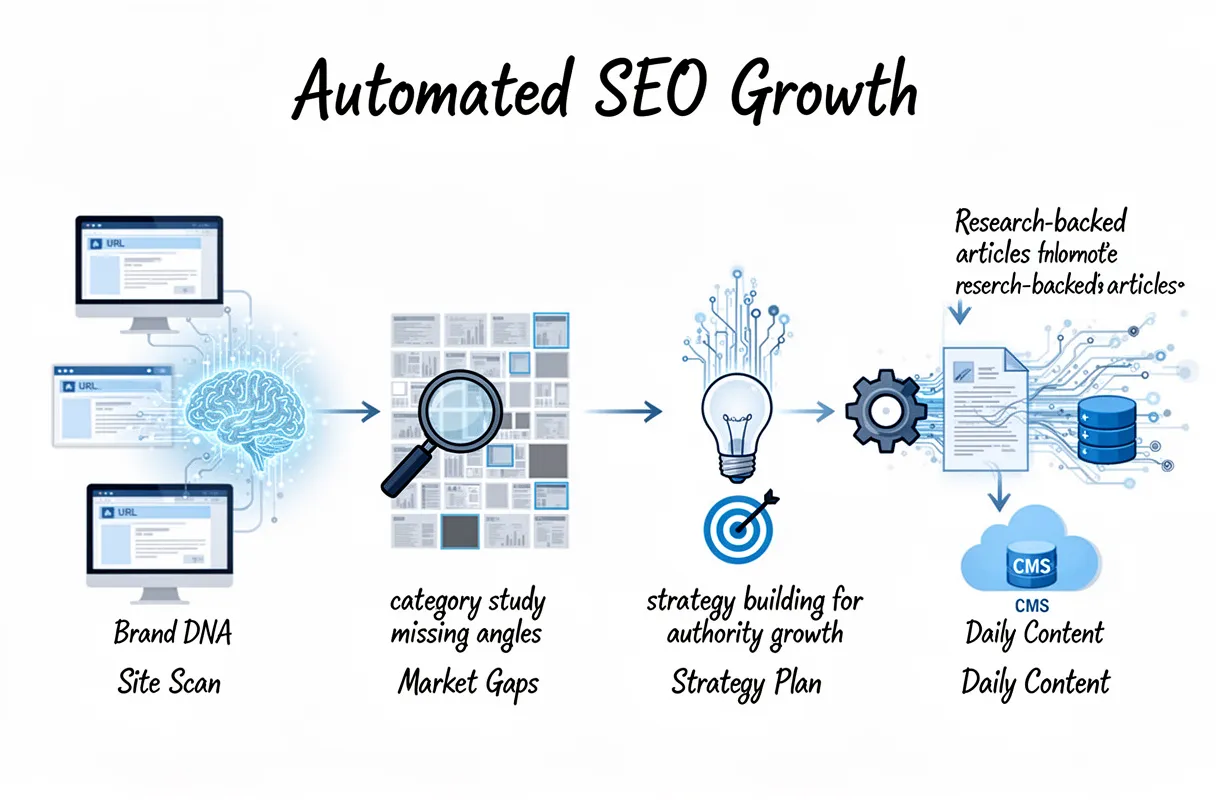
- Input Your Site URL for Brand DNA: You start by adding your website’s URL into FlipAEO. Our system then reads your entire site, analyzing existing content, tone, and audience to prepare your unique Brand DNA. This foundational step ensures all future content perfectly aligns with your established voice and expertise.
- Category Deep Dive for Gaps: FlipAEO thoroughly studies your specific industry and content category. It identifies existing content angles that are overused and, more importantly, pinpoints crucial information gaps that competitors consistently miss. Our proprietary multi-stage research goes deeper than traditional keyword tools, finding opportunities in overlooked semantic territories.
- Authority Plan Built on Intent: We don’t just generate articles. FlipAEO builds a strategic content plan around real user questions and underlying search intent, specifically designed for authority growth. This plan prioritizes topics where your brand can genuinely become the definitive source.
- Toggle Automation ON for Daily CMS Delivery: With your plan in place, you simply toggle automation ‘ON’. FlipAEO then delivers one fully research-backed article per day directly to your CMS. Each piece includes optimal semantic internal linking and is optimized using vector embeddings to ensure it resonates with complex AI search models.
Reverse engineering AI for authority
Our platform doesn’t just write; it reverse-engineers AI to build genuine brand authority, a stark contrast to the keyword-stuffing tools prevalent today. We understand that modern AI search engines don’t merely scan for keywords.
Traditional AI content generation still fixates on keyword density. We move past this, using vector embeddings to map complex semantic relationships instead. This means our content understands context, nuance, and intent at a much deeper level.
This approach ensures content isn’t just readable, but truly AI-search ready, designed for systems like Google SGE and Perplexity AI. It anticipates and answers questions proactively.
Every piece prioritizes answer-first content. It directly addresses user questions with authoritative, concise information, cutting through the noise. This eliminates the need for users to dig for relevant answers.
This deliberate structure naturally cultivates brand authority, positioning your site as the definitive source for complex queries. It’s about being helpful, not just visible.
Many ‘AI writers’ still churn out articles based on simple keyword lists. They generate volume but often lack the depth or contextual relevance modern AI algorithms demand.
Our system leverages those vector embeddings for intelligent internal linking, too. Instead of manual or simplistic connections, it builds a powerful semantic web across your entire site. This helps AI understand the breadth and depth of your expertise.
It’s a foundational shift. We don’t chase fleeting trends; our focus remains on durable, highly relevant content that satisfies deep user intent.
Calculating the ROI of automation
Calculating the return on investment (ROI) for SEO automation means quantifying the tangible benefits, like time saved and increased output, against the actual cost of your tools. It’s a clear financial equation.
Consider the human hours freed up from repetitive, time-consuming tasks. For instance, content brief creation—a manual process—can take a skilled content strategist several hours per brief.
Automating 50% of your content brief generation instantly reallocates those hours. Our platform streamlines data gathering, competitive analysis, and structure outlining.
This shift allows your existing team to produce double the content volume without adding headcount. That’s a direct, measurable reduction in operational costs per piece.
But ROI extends beyond just time. Track your organic impressions, clicks, and conversions as primary indicators. These numbers directly correlate with enhanced search visibility.
Early on, focus on organic impressions and click-through rates (CTR). They show if your newly automated, AI-optimized content is resonating with search engine users.
We recommend a granular approach, dissecting where automation delivers the most impact. Is it keyword research, technical audits, or semantic content mapping? Pinpoint the gains.
Properly measuring the ROI of your AI search efforts is critical, and understanding how these metrics translate into revenue is paramount. You need to know what to look for beyond surface-level analytics. For deeper insights, learn more about understanding AI-driven traffic patterns and how to track referral sources.
Your next step is to select a single, repetitive SEO task your team handles daily. Automate that one task and meticulously track the time savings over 30 days. Compare this directly to your automation tool’s monthly subscription.
Ethical ways to use AI for SEO content
Ethical AI use for SEO content in 2026 prioritizes genuine human value, not merely algorithmic manipulation. It’s about augmenting your team’s expertise, not replacing it with shallow text.
Google’s Helpful Content Update solidified this stance: content must serve people first. They reward quality and usefulness, regardless of the generation method. As confirmed by Google’s official guidelines on AI-generated content, their systems prioritize expertise and trustworthiness.
Low-quality AI-generated content pushes you into danger zones. Many brands still chase volume, flooding the web with unoriginal, unverified material. This dilutes authority and can trigger ranking penalties.
That’s a losing game.
We focus on using AI to handle research, outline generation, and initial drafts. But a human expert must then refine, verify, and infuse that output with unique insights and brand voice. This isn’t about letting AI write your entire blog; it’s about making your experts 10x more efficient.
You should view AI as a powerful co-pilot, not an autonomous pilot. It helps process vast amounts of data quickly. But the critical thinking, the nuance, the real connection with your audience – that remains firmly in human hands.
Common questions about automating SEO
Do automated SEO tools adapt to algorithm updates?
Reputable automated SEO tools integrate constant algorithm updates directly into their data models and feature sets. This means tool capabilities and recommended actions change rapidly. What worked effectively six months ago might be obsolete now.
Leading platforms (like those we reviewed earlier) push updates weekly, sometimes daily. These updates reflect shifts in search behavior, new content types, or Google’s evolving guidelines. Our own predictive analytics module helps anticipate these changes.
Can automation really help with link building?
Automation significantly assists with link building research and the initial stages of outreach. It does not fully automate the critical relationship-building aspect. Tools can identify broken links on competitor sites. They can suggest high-authority outreach targets instantly.
Are there free trials for automated SEO software?
Most automated SEO software offers free trials or limited freemium versions. These are designed for testing purposes, not for achieving sustained ranking improvements. They let you explore the interface and evaluate core functionalities.
Typically, these trials come with strict limitations. You might have caps on projects, keywords tracked, or the amount of data accessible. Use them to determine if the tool fits your workflow before committing to a paid plan.
Can I get results with a free version?
Achieving significant, sustained results with only free SEO tools is highly improbable. Free versions serve as a basic entry point for initial diagnosis, not for driving long-term growth or competitive advantage. They offer a glimpse into problems, but rarely provide the depth needed for solutions.
You can also draft initial outreach emails, track responses, and monitor campaign progress through these platforms. The human touch remains essential for securing truly valuable, editorially-placed links. No bot can replace genuine trust.
Take ScreamingFrog’s free version for instance. It’s an excellent tool for technical audits, letting you crawl up to 500 URLs. You can effectively identify broken links, crawl depth issues, and basic redirect chains within that limit.
But these free versions come with strict limitations. You won’t get access to premium data sets, which are critical for strategic SEO. There’s no comprehensive competitor analysis. No advanced content gap insights.
They diagnose, but they don’t prescribe a full course of treatment. True SEO results, especially in the evolving AI search landscape, demand consistent data, strategic insights, and the ability to track and adapt. This requires investment beyond the free tier.