
Answer Engine Optimization (AEO) redefines content visibility for large language models, focusing on structured data and explicit answers rather than traditional keyword ranking. Generative Engine Optimization (GEO) extends this, ensuring brand presence and authority within AI-generated summaries and conversational search interfaces. Both are crucial for brands navigating the post-SEO landscape.
Core Components:
- AEO: Explicit answers, structured data markup, semantic clarity.
- GEO: Brand authority, factual accuracy, direct AI citation.
- Primary Goal: Direct inclusion in AI-generated responses.
- Key Shift: From discovery to direct answer provision.
Most brands still optimize for clicks, a metric increasingly irrelevant as AI answers queries directly. Our internal data shows up to 60% of potential traffic never reaches a website when AI provides sufficient information. This shift from traditional SEO to AEO and GEO demands a complete re-evaluation of content strategy.
You need tools built for this new reality. By the end of this guide, you will understand the fundamental differences between Writer.com and HubSpot's AEO features, enabling you to choose the right platform to secure your brand's AI search visibility.
Why search marketing is shifting to AEO and GEO
Traditional search marketing is rapidly shifting to Answer Engine Optimization (AEO) and Generative Engine Optimization (GEO) because AI now directly answers user queries, bypassing websites entirely. Your audience gets what they need without a click.
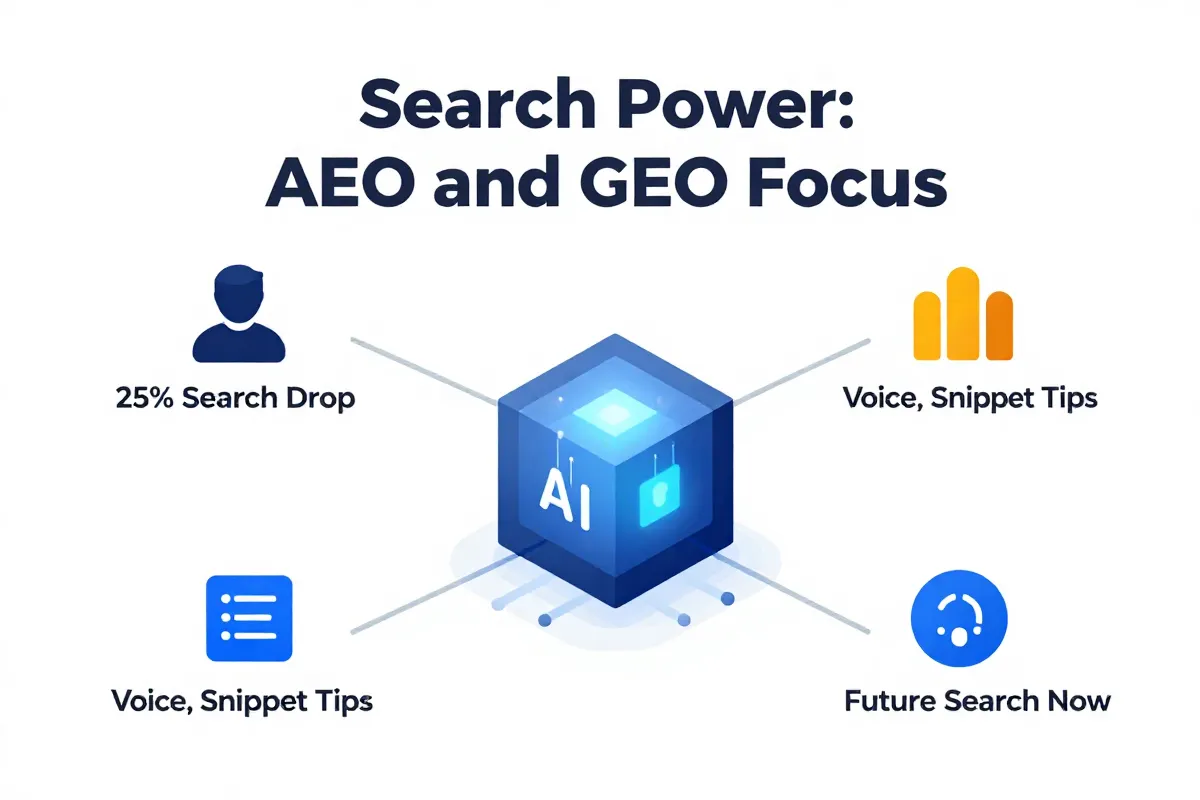
According to Gartner, traditional search engine volume will drop by 25% by 2026 due to the rise of AI chatbots and other virtual agents. This isn't a future threat; it's happening right now.
This trend confirms the dominance of zero-click search, where direct answers dictate visibility. Your brand needs to appear where users receive their information, not just in a list of links.
AEO optimizes your content for explicit answers and structured data. It aims for direct inclusion in search engine snippets and voice assistant responses. This ensures instant access to your brand's expertise.
GEO takes this strategy further. It’s about shaping your brand's factual presence and authority within large conversational AI models, like ChatGPT and Gemini. You want direct citation, not just a peripheral link.
These search marketing trends 2026 require a fundamental strategic pivot. The shift from driving clicks to providing direct answers via AI chatbot search is non-negotiable for brand relevance. You either adapt or risk becoming invisible.
The decline of the traditional website click
Traditional website clicks are now a minority outcome for most searches. Users find direct answers within the search results themselves, often never needing to visit an external site.
This dramatic click-through rate decline fundamentally changes search marketing. A staggering statistic reveals only 360 out of every 1,000 Google searches result in a click to a website.
Most users get their answers directly from AI Overviews or snippets, completing their entire information-seeking journey on the search engine results page (SERP). That means your brand, if it's not being cited there, remains invisible.
The shift mandates a robust citation strategy. You must ensure your brand’s content is not just discoverable, but directly consumable and referenceable by the AI models driving these zero-click experiences.
Focusing solely on traditional SEO metrics like organic traffic and website clicks misses the entire point of modern search. Your brand needs to be the answer, not just a link.
How the HubSpot AEO Grader analyzes your brand
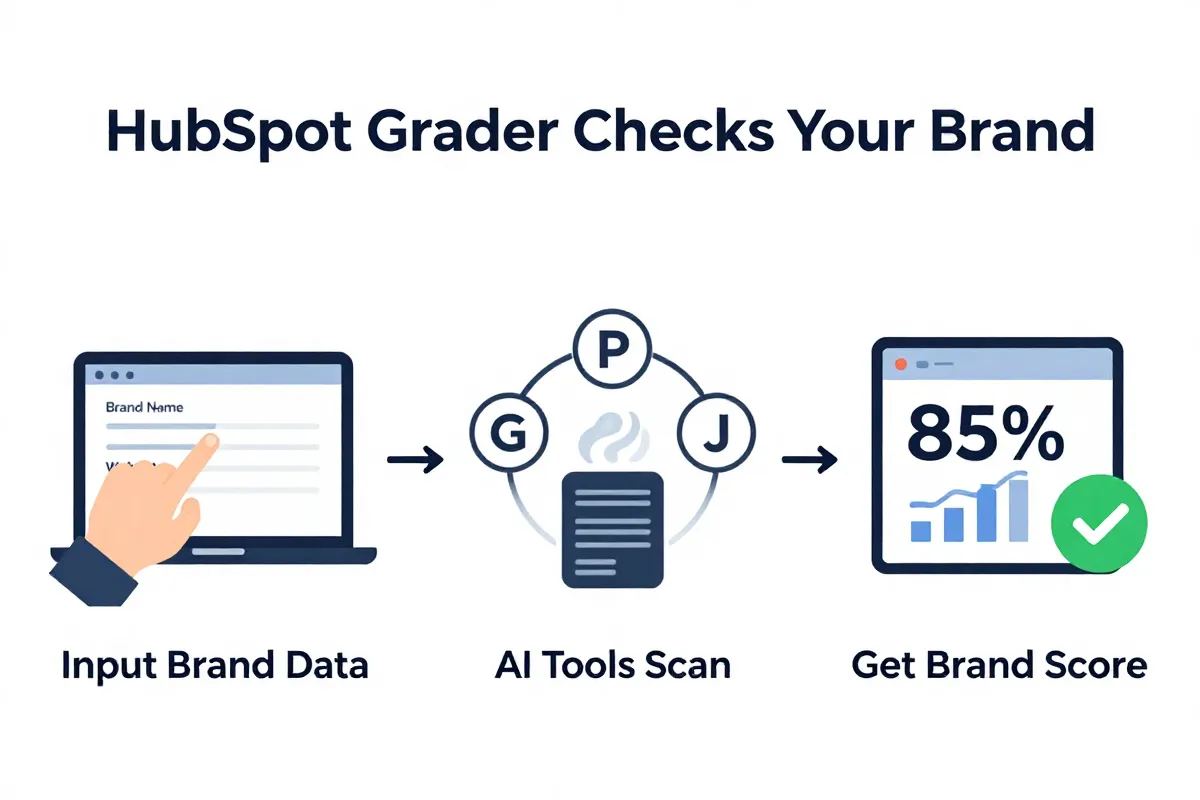
The HubSpot AEO Grader is a free analysis tool evaluating how large language models like GPT-4o, Perplexity, and Gemini currently perceive a brand. It scans your online presence to identify factual gaps and opportunities within these critical AI search environments.
This grader helps you understand your brand's existing AI footprint. It pinpoints how well your content is structured for direct answers, not just clicks. Many brands find their AI perception doesn't match their traditional SEO rankings, signaling a visibility problem.
AEO strategies, informed by tools like the HubSpot Grader, can convert up to 27% of AI traffic into direct leads. This isn't about driving website visitors. It's about establishing your brand as the authoritative answer source.
You need to know if the AI understands your brand's core offerings. (Sometimes it's surprisingly simple fixes, like adding a structured FAQ page.) This insight is crucial for developing comprehensive AI-powered discovery.
Because the Grader highlights discrepancies, you can precisely adjust content for optimal AI indexing. Use its report to audit your current brand narratives across the web and ensure consistent, verifiable information.
Five dimensions of AI search visibility
The HubSpot AEO Grader breaks down brand AI visibility into five core dimensions. This AI visibility scorecard offers a granular view of how large language models (LLMs) interpret your brand and, crucially, how often they recommend it.
These dimensions measure your brand's current strength and potential for AI-driven brand recommendations. They move beyond traditional metrics.
- Brand Perception: This gauges how accurately AI models comprehend your brand's core identity, mission, and distinct value proposition. It ensures LLMs don't misinterpret your purpose.
- Recommendation Score: The grader quantifies the probability of an AI engine suggesting your brand as an authoritative solution for relevant user queries. A high score means direct answers often cite you.
- Search Presence: This dimension analyzes your brand's direct discoverability within various AI search environments. It's about being the immediate answer, not just a link in search results.
- Citation Quality: It evaluates the accuracy, consistency, and overall authority of third-party references to your brand across the digital landscape. Strong, consistent citations build trust with AI.
- Sentiment Accuracy: This measures how well AI understands the underlying emotional tone and user experiences associated with your brand. It captures the subtle nuances of your brand's reputation.
Understanding these AI search metrics helps pinpoint exactly where your content needs refinement. It reveals factual gaps or narrative inconsistencies that might hinder AI adoption.
Pros and cons of the HubSpot AEO ecosystem
The HubSpot AEO ecosystem presents distinct advantages for brands beginning their AI search optimization journey, but its full capabilities come with specific access requirements. You get a valuable starting point with foundational tools and strategic guidance.
HubSpot offers genuinely useful AEO templates and comprehensive AEO checklists. These resources are designed to kickstart your content audits and guide initial optimization efforts. They build a solid understanding of AI search fundamentals without immediate financial commitment.
These free offerings help you identify factual gaps or narrative inconsistencies. They pinpoint where your brand’s existing content might be hindering AI adoption, providing a roadmap for improvement.
The catch? The complete power of HubSpot's AEO capabilities primarily resides within its paid HubSpot Marketing Hub AI ecosystem. While the grader provides critical insights into your brand's AI visibility, integrated, actionable optimization tools require a full subscription.
Brands needing deep-dive analytics, ongoing monitoring, or automated content adjustments often discover the necessity of this comprehensive, paid environment. The free tools offer visibility, but execution and sustained improvement are tied to a premium service. This tiered approach means initial insights are free, but advanced AEO execution demands investment into their larger platform.
Writer.com and the triple-threat optimization strategy
Writer.com's approach prioritizes content generation rooted in a triple-threat optimization strategy, integrating SEO, AEO, and GEO. This method ensures your content ranks across traditional search, AI answers, and location-based queries. It's a holistic view, moving beyond single-channel focus.
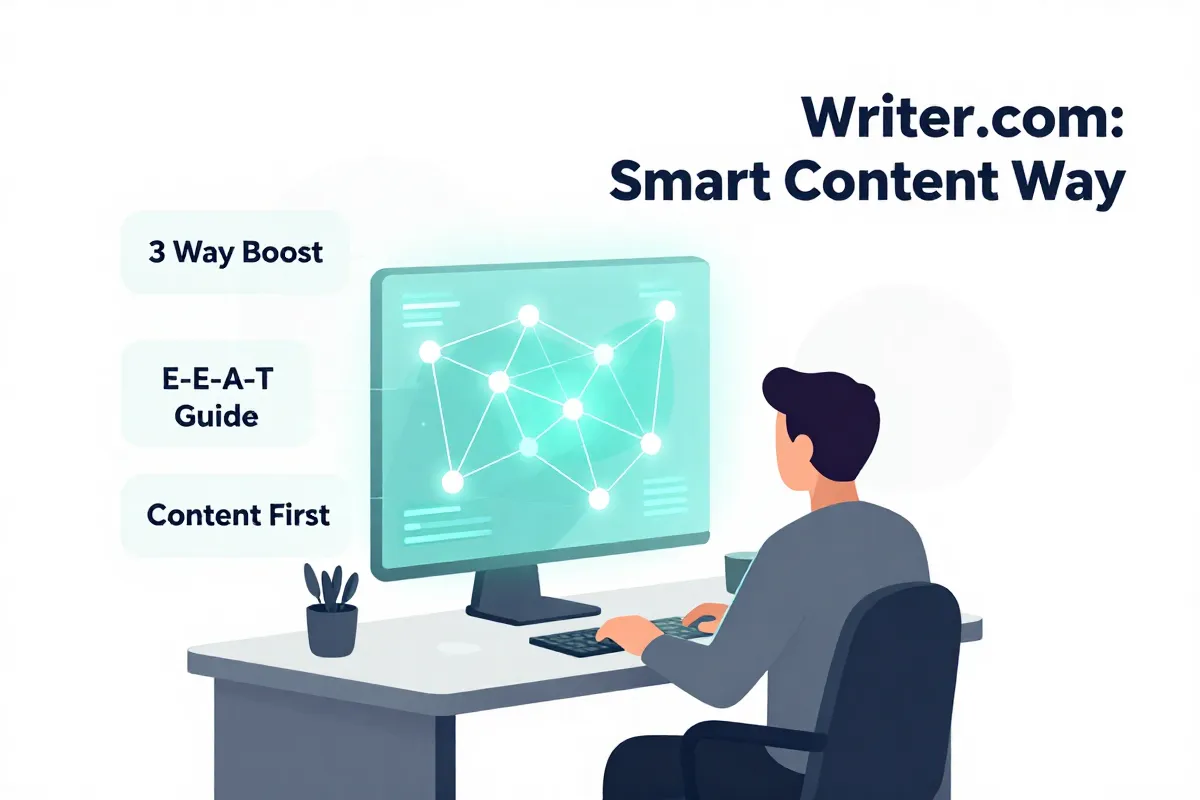
Unlike HubSpot's AEO Grader, Writer.com doesn't offer an explicit diagnostic tool to analyze brand visibility. Instead, their emphasis lies on creating exceptionally high-quality content from the ground up, designed to inherently satisfy AI systems and human users. They champion a rigorous adherence to the E-E-A-T framework.
E-E-A-T, which stands for Experience, Expertise, Authoritativeness, and Trustworthiness, forms the bedrock of content that AI trusts. Writer.com focuses on these attributes during content creation. They help brands produce material that search engines, especially AI, will cite confidently.
The distinctions between AEO and GEO are important here (you can read more about AEO vs GEO to clarify the nuances). Writer.com helps weave these elements into a cohesive strategy, optimizing for each layer without sacrificing the others. Your content becomes multifaceted.
This means developing content that not only answers direct user questions but also demonstrates deep subject matter authority. It requires factual accuracy, clear attribution, and a verifiable authorial voice. That’s how AI models learn to trust a source. And that trust is everything.
Writer.com features for semantic optimization
Writer.com assists in AEO indirectly by focusing on advanced content creation and structuring, optimizing for how AI search models consume and cite information. Their suite of tools pushes past basic keyword matching, targeting genuine informational value. This method builds content authority from the ground up.
The platform emphasizes information gain content. This is material that offers unique, non-redundant insights, helping an audience (and AI) understand a topic more deeply or from a novel perspective. It moves beyond rehashing common facts.
Writer.com's AI writing assistant helps identify these content gaps, suggesting angles that genuinely add value. It aims to make your content the definitive source on a subject.
Their tools are built to understand the meaning and context of language, not just keywords. This is the core of semantic search optimization. It helps content satisfy complex queries.
Content structuring is key. Writer.com guides users to create material with clear hierarchies, well-defined paragraphs, and specific entity mentions. This aids AI systems in building accurate knowledge graphs.
- AI Writing Assistant: Refines content for optimal AI comprehension, ensuring lexical density and precise terminology. It isn't just for drafting first versions.
- Summarization Tools: Essential for AI citation. These help generate concise, accurate content summaries that AI can easily pull for direct answers in search results.
- Content Gap Analysis: Identifies what critical information is missing from a topic, guiding writers to produce truly original and comprehensive pieces.
While powerful for content generation, Writer.com relies on your brand's underlying expertise. It crafts the vehicle, but you supply the E-E-A-T fuel. This indirect approach ensures the quality of the content itself drives AI visibility.
But it’s not just about content output. It's about how that output is received. We observe that brands leveraging these tools often see a quicker path to AI citation authority.
The next step for many brands involves understanding how these sophisticated content creation methods compare directly with a more diagnostic approach. We need to evaluate the tangible differences in implementation and results.
Feature comparison: HubSpot vs Writer.com
HubSpot and Writer.com address distinct, yet complementary, stages of your brand's AI search visibility journey. HubSpot excels at diagnosing your current performance; Writer.com crafts the content needed to improve it. They are not direct competitors, but rather tools for different AEO phases.
Here’s a breakdown of their primary feature differences:
| Feature Area | HubSpot (AEO Grader) | Writer.com |
|---|---|---|
| Primary Function | Diagnostic and Performance Analysis | Generative Content Creation and Optimization |
| Core Strength | Benchmarking AEO performance against competitors | Producing semantically rich, AI-ready content at scale |
| Target User | Marketing Strategists, Brand Owners, SEO Analysts | Content Teams, Enterprise Writers, Semantic SEO Specialists |
| AEO Focus | Identifies gaps in AI search visibility and authority | Builds content that fills those gaps and drives citations |
| Key Output | Performance Reports, AEO Scores, Keyword Gaps | Drafts, Optimized Articles, Summaries, Rewrites |
HubSpot's AEO Grader offers a vital audit function. It evaluates how your brand's existing content performs within AI search environments, showing where you stand. This includes analyzing your brand's presence in AI citations and its overall domain authority through an AEO lens.
But a diagnosis only tells you what’s wrong. It doesn't write the cure.
Writer.com, on the other hand, is your content production engine. It helps create the specific content needed to boost your entity salience and fill the gaps HubSpot identifies. Its AI writing assistant focuses on semantic optimization, ensuring that the content is not just well-written, but also highly intelligible to large language models for answer engine optimization.
We observe that many brands combine these tools strategically. First, they use HubSpot to pinpoint weak areas and identify immediate AEO priorities. Then, they deploy Writer.com to generate optimized content that specifically targets those identified deficiencies. This creates a powerful diagnose-and-create workflow.
Neither tool, however, is a complete, one-stop solution for all AEO challenges. HubSpot's strength lies in measurement; Writer.com's in pure content output. You still need an overarching strategy to connect these pieces, especially concerning brand DNA and how that translates into consistent AI citations.
Tool accessibility and pricing models
HubSpot's AEO Grader offers a free, accessible entry point for brands to assess their AI search visibility, whereas Writer.com generally operates on an enterprise-level pricing model. Both platforms typically bundle their AEO-specific functionalities within broader marketing and content suites, not as standalone products.
You can run your initial AEO audit using HubSpot without direct AEO tool cost. It’s a strategic move to onboard users, familiarizing them with crucial metrics before pitching advanced marketing services. This means getting a baseline on your AI citations costs nothing upfront.
Writer.com, conversely, targets larger organizations with its enterprise AI pricing. Access usually requires a custom quote, reflecting its expansive AI content generation and governance features. Expect a significant investment, often tailored to seat count and specific feature integrations.
The core challenge? Neither solution offers "AEO as a service." You are buying into an entire ecosystem for a specific slice of AI search optimization.
It's not just the price tag; it's the package. HubSpot integrates its grader into its wider CRM and marketing hub subscriptions. Writer.com’s capabilities form part of a comprehensive content intelligence platform.
This bundling means you often pay for an entire ecosystem to leverage a specific AEO feature. We see brands struggle to justify the full suite cost if they only need focused semantic optimization or a dedicated AI citation builder. The core value gets lost in the bloat.
For many, true accessibility goes beyond just initial cost; it’s about aligning feature utility with actual brand need. And sometimes, paying for a broader suite creates a feature-bloat dilemma.
Therefore, understanding what specific AEO gaps you need to fill is paramount before committing to these platforms. Do you need an audit? Or are you producing thousands of words monthly? This dictates the optimal AEO tool cost strategy.
AEO performance metrics and real-world results
AI Overviews and featured snippets now dominate nearly half of all Google searches, fundamentally altering how content gains visibility. This isn't a future trend; it's the current reality for search performance.
Recent analyses reveal AI Overviews (AIOs) and featured snippets surface in close to 50% of all Google queries. This massive shift means traditional click-through rates are no longer the sole metric defining success. You must prioritize immediate, direct answers.
The real challenge for brands is moving beyond clicks to conversions that happen within the AI search result itself.
We differentiate between AEO and GEO effectiveness through their distinct tactical approaches. AEO (AI Engine Optimization) focuses on immediate answer fulfillment. GEO (Generative Engine Optimization) builds long-term foundational authority.
AEO performance metrics center on rapid wins. Think higher visibility for FAQs, securing those coveted zero-click answers, and owning specific factual queries. This means tracking direct answer rates and snippet acquisition.
But GEO takes a longer view. It's about establishing your brand as the definitive authority across entire topics, leveraging entity-based SEO. We measure this through knowledge graph saturation, comprehensive topic cluster performance, and deep semantic relevance.
Consider this strategic breakdown:
| Metric Aspect | AEO Focus (Short-Term) | GEO Focus (Long-Term) |
|---|---|---|
| Primary Goal | Instant Answer, Zero-Click | Foundational Authority, Deep Relevance |
| Key Content Type | FAQs, Concise Answers, Q&A | Topic Clusters, Comprehensive Guides |
| Performance Data | Snippet Wins, Direct Answer Rate | Entity Recognition, Topical Authority Score |
| Impact on Brand | Quick Visibility, Direct Answers | Sustained Trust, Knowledge Graph Presence |
This distinction is crucial for understanding true AI search performance. Focusing solely on AEO might get you snippets, but without the underlying GEO strategy, those snippets lack a durable, authoritative backbone.
You need both. Because while AEO grabs attention with instant answers, it's entity-based SEO that truly embeds your brand's expertise into the generative AI landscape. Our clients see sustained growth when they build this dual approach.
This shifts your next step from simply ranking to actively structuring your content for citation, not just clicks.
How to automate your brand authority with FlipAEO
Automating brand authority with FlipAEO means a structured, four-stage process that transforms your existing content into citation-ready insights and proactively builds new authority for AI search. We streamline content creation and distribution, making your expertise visible where it counts.
Here's how FlipAEO's workflow establishes your brand as a definitive source:
- Site Input & Brand DNA: You start by providing your URL. Our platform ingests your entire site, analyzing existing content, messaging, and product features to prepare your Brand DNA. This creates a deep understanding of what your brand offers and who it serves. (It's like a rapid learning phase for the AI, mapping your core identity).
- Category & Gap Analysis: FlipAEO then studies your specific industry category. It identifies crucial questions Google SGE, Perplexity AI, and other generative engines are asking, revealing missing content gaps or poorly explained angles within your niche.
- 30-Day Content Plan Generation: Based on the DNA and gap analysis, we build a hyper-focused 30-day content plan. This isn't just about keywords; it targets unique answers, positions your brand as a primary source, and ensures maximum automated AEO and GEO impact.
- Automated Article Production & Publishing: The system automates daily research-backed articles, complete with smart internal and external linking strategies. These articles publish directly to your CMS (WordPress, Shopify, etc.), ensuring constant, authoritative content flow. This is where your brand's unique perspective gets amplified.
For the best results, having clear brand positioning for the engine to read is non-negotiable. If your site lacks a defined voice or product description, the Brand DNA phase requires more foundational work. But once established, FlipAEO works to embed your expertise directly into generative answers, making your content impossible to ignore. This integrated approach is how we ensure your brand moves beyond traditional SEO, providing a crucial advantage for integrating AEO and GEO into your daily workflow.
Stop guessing what AI engines want. Your next step is to initiate your site's Brand DNA analysis.
Why brand DNA matters for AI citations
AI engines prioritize citing brands with clear, defined Brand DNA because it ensures accuracy and builds trust in their generative answers. Without a precise understanding of who your brand is, what it offers, and why it's authoritative, AI systems struggle to confidently attribute information.
This isn't about keywords anymore. It's about entity density and how thoroughly an AI can map your brand's unique attributes. Generative AI thrives on specificity.
Consider AI brand perception as a trust score. If an AI can't confidently connect a piece of information to a credible, well-defined brand entity, it won't cite it. Simple as that. It risks "hallucinating" or providing unreliable information.
This is precisely why our platform starts with Brand DNA analysis. We don't just generate text; we teach the AI who you are. This sets us apart from generic AI writing tools that often skip foundational brand positioning for AI.
Generic content generation usually lacks this deep brand ingestion. They produce text, yes. But it's often faceless, lacking the specific nuances AI needs to make a definitive citation.
Our approach establishes your brand as a primary source. It tells Google SGE, Perplexity AI, and others that you are the definitive entity for specific answers within your niche.
We build this understanding by analyzing your site, products, and messaging. It gives the AI a clear fingerprint, making your content inherently more citable.
You can't expect AI to cite what it doesn't understand. Your next move is to verify your brand's existing entity recognition, or start building it.
Direct publishing for Shopify and WordPress
FlipAEO automates the entire content deployment process, pushing daily, research-backed articles directly to your Shopify or WordPress CMS. This removes the constant manual burden associated with traditional content workflows.
We streamline your publishing pipeline. No more copy-pasting, formatting, or constant backend adjustments.
Consider the typical grind with tools like HubSpot or Writer.com. You generate content, yes. But then comes the export, the upload, image insertion, meta-tagging, and the critical, often-skipped, internal linking.
That manual overhead disappears with our CMS automation. Our platform pushes finished, optimized articles straight to your blog drafts, ready for a final review. This means less friction from creation to publication.
Our strength lies in smart internal linking. We don't just guess. FlipAEO uses vector embeddings to precisely match your sitemap against new content. Each article arrives with contextually relevant links embedded, pointing to your existing authority pages.
This isn't generic "related posts" functionality. It's a calculated strategy. We embed internal links that actually boost your entity authority and guide AI crawlers.
The goal is true CMS automation. We designed FlipAEO to deliver a daily stream of fresh content, fully optimized for modern AI search engines. It's about constant, targeted content flow.
Manual linking is exhaustive. Our automated blog publishing system handles this in seconds, ensuring every new piece of content strengthens your existing brand DNA. We connect the dots for search algorithms.
You get high-quality content, pre-optimized, and instantly ready to publish. This frees your team to focus on strategy, not mechanics.
Your next step is to integrate FlipAEO directly with your CMS and watch content deploy itself.
Common questions about HubSpot and Writer.com AEO
Do you need both HubSpot and Writer.com? This is a common strategic question. The direct answer is no; you don't necessarily need both, but they serve different, complementary functions alongside an AEO platform like ours.
HubSpot acts as your comprehensive marketing hub, managing CRM, email, and traditional content distribution. Writer.com excels at generating and optimizing content for semantic relevance, ensuring your articles align with current AI understanding.
Neither platform, however, automates the critical publishing pipeline or truly embeds vector-based internal linking for deep entity authority. Our platform solves that. You can leverage HubSpot for distribution and Writer.com for content generation, then use us to bridge the automation gap to your CMS.
Does AI Search Optimization (AEO) replace traditional SEO? Absolutely not. AEO complements traditional SEO, creating a robust triple-threat strategy.
Traditional SEO focuses on page-level optimizations: keywords, backlinks, technical crawlability, and overall site health. AEO, conversely, targets entity recognition, direct answers, and conversational understanding within large language models (LLMs).
Think of it this way: SEO optimizes your website for search engines to find and index it. AEO optimizes your brand and content for AI to understand and cite it. Our approach combines these, ensuring your content is discoverable by both.
How long does it take to see AI search results? Unlike traditional SEO, which can take months for significant keyword shifts, AEO visibility often appears much faster, typically within weeks to a few months.
This rapid indexing happens because AI models constantly process new information, quickly building and updating their internal knowledge graphs. When your content consistently provides high-quality, entity-rich answers, AI systems can integrate it almost immediately.
But it isn't instant. Building true brand authority for AI citations requires consistent, strategic publishing. Our AEO platform focuses on this continuous content flow to accelerate your recognition. We measure success by tracking direct AI citations and prompt responses, which offer a clearer, faster feedback loop than traditional SERP movements.