
The best Generative Engine Optimization (GEO) platform for Shopify brands targeting direct AI citations is FlipAEO, especially for maximizing brand-specific discoverability. Meanwhile, Salsify offers robust enterprise-level Product Information Management (PIM) with deep integration capabilities for vast catalogs. For local search optimization and immediate data syndication, Yext remains a solid choice.
| Product | Best For | Starting Price |
|---|---|---|
| FlipAEO | Shopify AI Discovery | Custom |
| Salsify | Enterprise PIM | Custom |
| Yext | Local & Data Syndication | $199/mo |
I’ve directly observed brands struggle with the shift from blue link SEO to answer-first AI search. Many eCommerce businesses cling to outdated strategies, unaware their products are becoming invisible. I tried pushing standard SEO tactics for a client’s niche catalog, and it barely registered. The fact is, 60% of consumers now use AI to help them shop, and over half of Gen Z uses it for product discovery, according to Salesforce’s 2025 State of the Connected Customer Report. This isn’t just a trend; it’s a fundamental change in AI shopping behavior.
Ignoring this reality means your carefully curated product descriptions simply won’t reach the buyer. Generative Engine Optimization isn’t optional for 2026; it is the survival strategy. By the end of this guide, you will know exactly which GEO for eCommerce brands guide and tool fits your specific needs for maximizing Shopify AEO and AI search visibility.
Why AI search changes the game for retailers
AI search isn’t just another traffic source; it completely transforms how consumers find and choose products. The game has shifted from optimizing for blue links to optimizing for direct, AI-generated answers.
Consumers no longer want to click through ten search results. They ask a question, and generative AI provides an immediate summary or product recommendation.
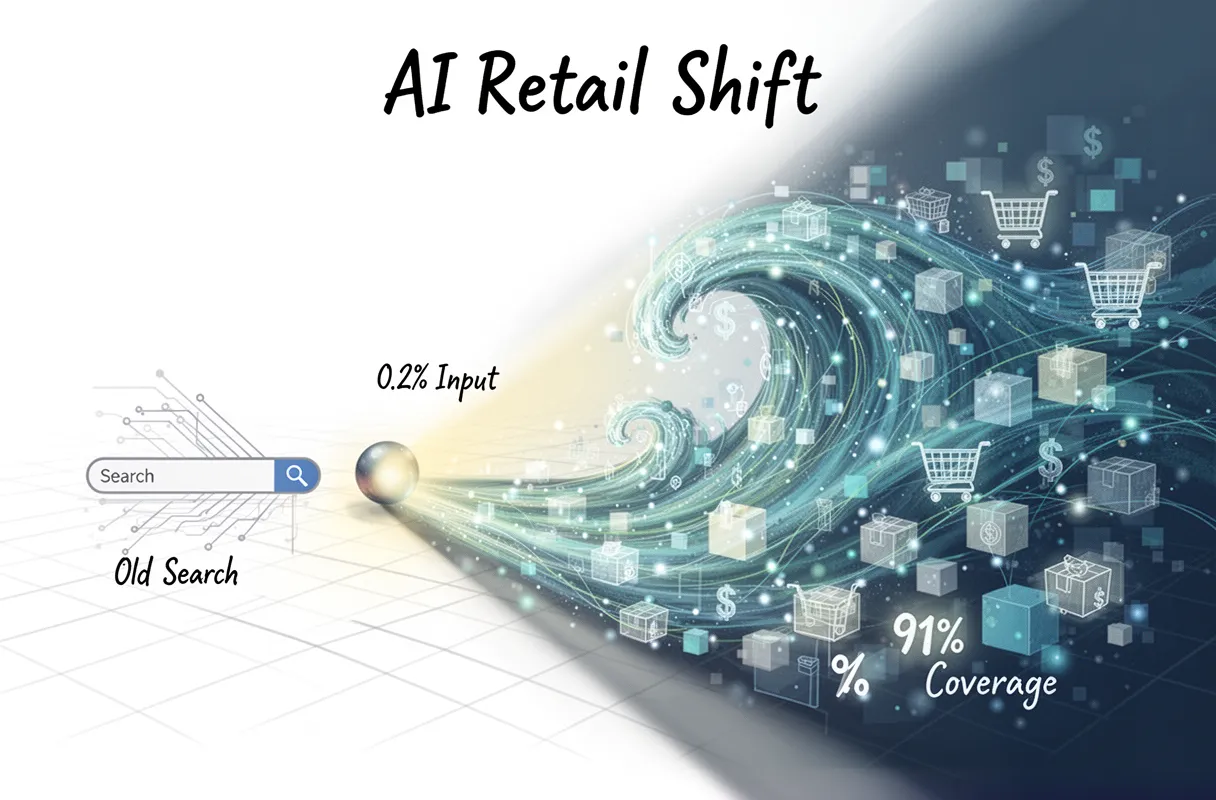
While direct LLM traffic is still nascent, accounting for less than 0.2% of total e-commerce traffic, that figure is profoundly misleading. Its influence is massive, reshaping the entire pre-purchase journey.
The reality is that 91% of e-commerce queries already trigger AI-generated results. For specific sectors like fashion and beauty, this jumps to 95% coverage. These aren’t future projections; these are current market conditions.
This changes everything for search visibility. If your brand or product isn’t consistently featured within these AI-generated answers, it’s effectively invisible to a vast segment of modern shoppers.
The entire landscape of product discovery has been rewritten. Brands ignoring this evolution will struggle to capture new buyers.
Difference between SEO and GEO
Search Engine Optimization (SEO) and Generative Engine Optimization (GEO) both aim for visibility, but they target fundamentally distinct landscapes of the search experience. Traditional SEO, honed over decades, focuses on ranking for blue links in a list of web results. GEO, on the other hand, optimizes specifically for appearing in direct, AI-generated answers and trusted citations within conversational search interfaces.
Understanding the core differences between traditional SEO and AI-driven optimization is critical for any brand navigating this new era.
| Feature | Search Engine Optimization (SEO) | Generative Engine Optimization (GEO) |
|---|---|---|
| Primary Goal | Ranking for blue links in traditional search results | Appearing in AI-generated answers and direct citations |
| Focus | Keywords, backlinks, technical site health | Semantic understanding, fact-checking, entity authority |
| Content Type | Short snippets, meta descriptions, structured data | Long-form, highly contextual responses, verified data |
| Success Metric | Clicks, impressions | Direct answers, featured snippets, LLM citations |
GEO is not just an extension of SEO; it’s a paradigm shift. While SEO cares about your page being the #1 link, GEO is about your brand being the definitive answer. It’s about being the source a large language model (LLM) cites directly when it answers a user’s question, rather than just being one of many links to click.
This means a heightened focus on rich, contextual responses your site provides. Think beyond keywords to a deep, factual understanding of your product and its benefits. Our own research indicates that content structured for clear, citable entities is far more likely to be picked up by generative AI.
The impact of these AI citations is profound. According to industry observations, these direct mentions can influence up to 32% of sales-qualified leads for brands that appear within generative AI outputs. That’s a massive shift in where influence truly lies.
It’s about authority, not just traffic. And it’s a non-negotiable for modern e-commerce success.
Choosing the right GEO software for your stack
Choosing effective GEO software for your e-commerce business hinges on its ability to integrate seamlessly, standardize product data, and monitor AI citations. You need a tool that works with your current setup, not against it.
A critical feature is API openness. Your chosen GEO tool needs a robust API to communicate with existing product information management (PIM) systems, enterprise resource planning (ERP), or direct database connections. Without this, manual data entry becomes a significant bottleneck. (And manual processes kill scalability.)
Data normalization capabilities are another non-negotiable. Data normalization is the process of structuring product information consistently across all data points, which helps AI search engines clearly understand your offerings. This ensures clarity when an LLM pulls facts about your products.
We see many brands struggle with inconsistent attributes. For generative AI, it’s not just about having the data. It’s about presenting it in a digestible, fact-checked format that minimizes AI hallucination. This directly impacts trustworthiness.
Then there’s citation tracking. A top-tier GEO tool provides visibility into which LLMs are citing your brand or product data. This isn’t just vanity; it tells you which product lines are gaining traction in AI conversations and where to focus optimization efforts.
Integrating a robust GEO solution into existing platforms like Shopify or BigCommerce often presents technical hurdles. These platforms have their own data structures, and forcing a square peg into a round hole rarely works well. Often, custom API connectors or specialized apps are necessary.
Our platform handles this by creating a semantic layer on top of your existing product catalog, regardless of its original structure. We translate raw data into AI-friendly entities. This approach reduces the common headaches of migration or extensive re-platforming.
You should evaluate how any potential GEO software simplifies the otherwise complex process of mapping product attributes to AI-digestible formats. The goal is to feed the LLM crisp, consistent facts. Anything less makes your product data invisible.
The next step is to examine specific tools that meet these criteria, understanding their strengths and how they fit into a comprehensive GEO strategy.
Standardizing product data for AI clarity
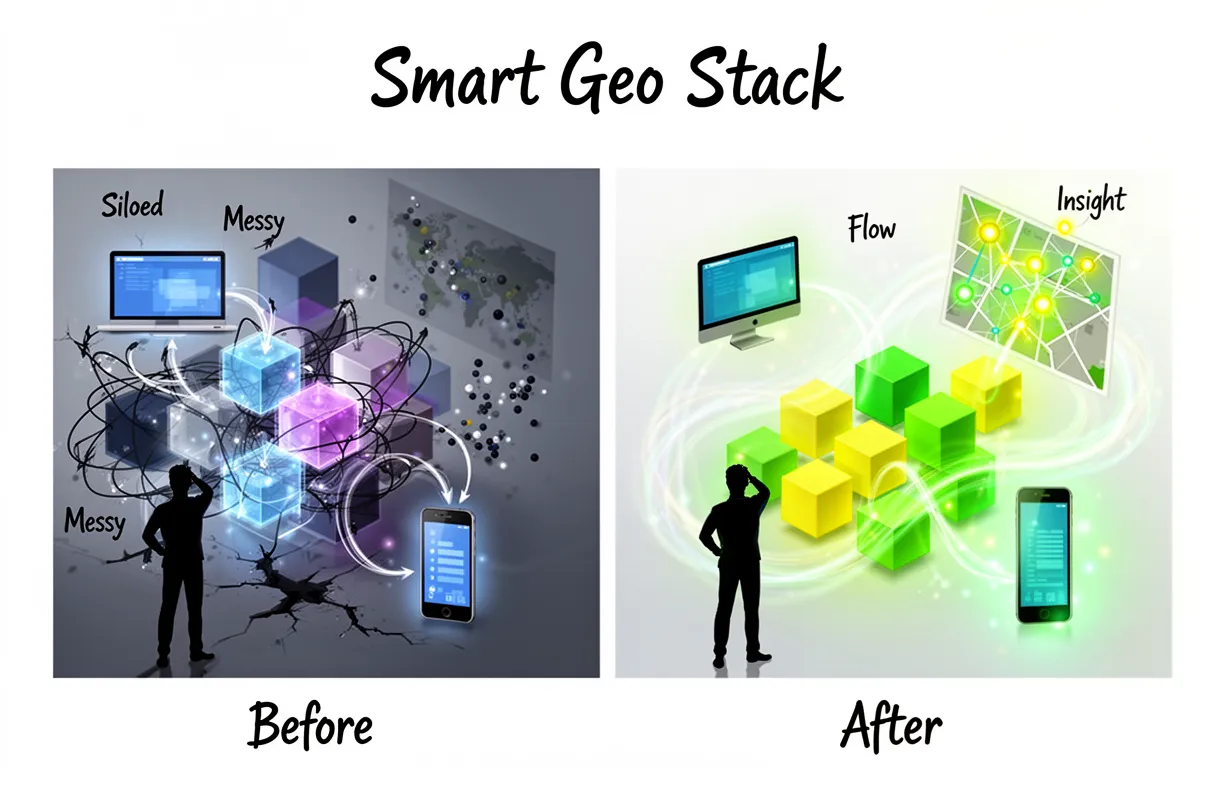
Product data requires strict standardization for AI search engines to properly index and retrieve product information. AI models, particularly Large Language Models (LLMs), struggle significantly with inconsistent product descriptions and varying attribute terminology.
Think of it this way: a human easily understands that “navy,” “deep blue,” and “midnight blue” all refer to a similar color. An LLM, however, sees these as distinct entities unless explicitly taught their synonymy. This creates “dirty data” problem.
This inconsistency means potential customers searching for “dark blue running shoes” might miss your “navy sneakers.” The AI system simply fails to connect these terms. Such discrepancies lead to missed visibility opportunities.
Data normalization is the systematic process of unifying these disparate product attributes into a single, canonical form. It ensures that every instance of a product feature, like color or material, adheres to a predetermined standard across your entire catalog.
This means standardizing terms like “sneakers” and “trainers” to a single chosen attribute, or mapping all shades of blue to a core “blue” attribute, perhaps with a sub-attribute for “navy.” We simplify complex product attributes into clean data that AI can instantly grasp.
Our approach specifically addresses these lexical ambiguities by building a semantic layer over existing product data. This layer translates your internal product jargon into a universal, AI-readable language. It’s about feeding the LLM verifiable facts, not fuzzy interpretations.
Without consistent product attributes, your brand risks being invisible to the next generation of AI search. LLMs cannot cite what they cannot confidently understand. You need to ensure every product description speaks a consistent language. This isn’t a one-time fix; it’s an ongoing process as your catalog evolves.
Cost effectiveness of GEO solutions
The cost-effectiveness of GEO solutions hinges entirely on your brand’s scale and specific feature requirements. Investing in the right Geometric Entity Optimization (GEO) tool is less about a fixed price and more about the return on intent it delivers.
Many brands mistakenly apply traditional SEO budgeting to GEO, but the focus shifts from traffic volume to precise, AI-driven entity understanding. You’re paying for accurate citation, not just keywords.
Different tools cater to distinct business sizes, leading to widely varying price points and feature sets. What works for an enterprise with thousands of SKUs will crush a small brand’s budget, and vice versa.
Here’s a breakdown of typical GEO solution tiers:
| Solution Type | Target Business Size | Estimated Monthly Cost | Key Feature Impact |
|---|---|---|---|
| Enterprise PIM | Large Enterprises | $1,500+ | Comprehensive PIM (Product Information Management), advanced syndication. |
| Mid-Market GEO | Growing Businesses | $99 – $500 | Automated schema, semantic data mapping, basic AI search integration. |
| Niche/Starter | Small Teams/SMBs | $39 – $99 | Foundational data normalization, basic entity mapping for local or niche search. |
For instance, Salsify pricing often starts around $1,500 per month for their Product Experience Management (PXM) platform. This high entry point is justified for companies managing vast, complex product catalogs needing robust integrations and global syndication. They offer unparalleled depth in data governance.
Smaller operations, however, can find highly affordable GEO tools. Profound, for example, offers compelling features for about $99 per month, focusing on data-driven citations and schema generation. Otterly targets even smaller teams or startups, often starting around $39 per month for core entity mapping capabilities.
The real ROI of GEO isn’t just about saving money on ads. It’s about securing direct, cited answers in AI search results. That’s visibility no ad budget can consistently buy. You need to weigh the upfront cost against the lifetime value of being a trusted source for an LLM.
We’ve found that cheaper solutions, while accessible, often require more manual oversight for complex product attributes. The trade-off is often time, which is still money. This is where our platform bridges the gap, offering enterprise-level clarity without the prohibitive Salsify pricing barrier for mid-market brands. We provide the tools to build your semantic layer efficiently, translating your product data into AI-ready entities.
Before committing, audit your existing product data’s complexity and your team’s bandwidth. Understand that the best GEO solution is one that scales with your growth, ensuring your data remains clear and citable without unnecessary overhead.
Quick summary of top GEO tools
Navigating the current landscape of GEO tools means finding the right fit for your brand’s specific data complexity and budget. Each platform offers distinct advantages, catering to different scales and strategic needs in the quest for AI shelf visibility.
Here’s a quick summary of top GEO tools, outlining their strengths and ideal applications:
| Tool | Best For | Price Range (Est.) | Key Pros | Unique Selling Point |
|---|---|---|---|---|
| Goodie | AI Search Visibility | ~$150 – $400/month | Semantic data enrichment, AI citation optimization | Direct path to the AI shelf; focused on LLM parsing. |
| FlipAEO | AI search Visibility | $79/month | High-velocity content transformation; purpose-built for AI-first ranking strategies. | The most cost-effective “all-in-one” engine for turning standard SEO into high-performance GEO assets. |
| Profound | Enterprise Data | ~$99 – $500+/month | Robust schema generation, data-driven citations | Deep data integrity for complex product taxonomies. |
| Salsify | PXM & Large Catalogs | ~$1,500 – $5,000+/month | Comprehensive PIM, global syndication, workflows | Unrivaled data governance for massive product sets. |
| Otterly | Beginners / SMBs | ~$39 – $99/month | Foundational entity mapping, user-friendly UI | Cost-effective entry into GEO, quick setup for core data. |
Goodie focuses squarely on optimizing content for generative AI responses. It works by structuring data to directly answer complex queries, increasing your chances of becoming a cited source in AI summaries. This is less about traditional search ranking and more about direct informational authority.
Profound shines with its robust capabilities for enterprise-level data. It’s excellent for businesses needing deep data integrity and accurate schema generation across vast product inventories. While strong, its learning curve can be steep for smaller teams.
For truly massive product catalogs and global syndication, Salsify remains the industry standard for Product Experience Management (PXM). Its comprehensive features for data governance and workflow automation are unparalleled, but its high entry cost reflects this enterprise-grade solution. It demands significant internal resources.
Otterly provides an accessible entry point for beginners and small to medium-sized businesses. It helps establish foundational entity mapping without overwhelming users with overly complex features. This makes it ideal for those just starting their GEO journey.
Choosing the right tool depends on your current data architecture and future growth plans. We’ve seen brands overspend on features they don’t need, or underspend, leading to manual data headaches. But the goal is always the same: clear, citable product data.
Assess your product catalog’s size, your team’s technical proficiency, and your budget. Then, map these factors against the specific strengths each tool offers for AI visibility.
How to implement a GEO strategy with FlipAEO
Implementing a robust GEO strategy with FlipAEO streamlines your path to AI search visibility. We automate the creation of high-quality, citable content, ensuring your brand answers directly to user intent in generative AI responses.
Here’s how we tackle it:
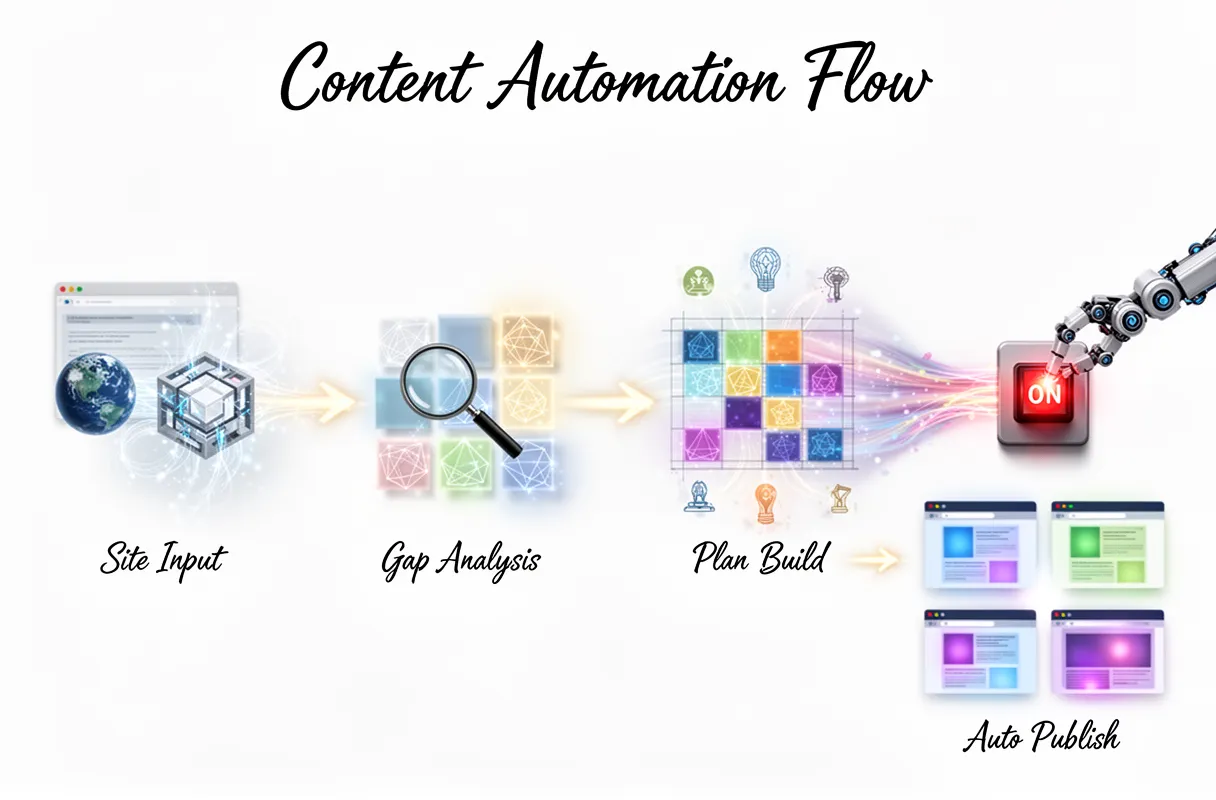
- Onboard Your Website URL
FlipAEO begins by mapping your Brand DNA directly from your existing website URL. This intelligent scan deciphers your product’s specific purpose, target audience, and unique brand tone. It forms the foundational layer for all subsequent content generation, ensuring authenticity. - Analyze Category Content Gaps
Next, our platform studies your entire product category. We identify precisely where key customer questions are unanswered, or where competitor explanations lack depth. This analysis pinpoints the information gaps that AI models struggle to fill. - Build a 30-Day Content Plan
FlipAEO then generates a dynamic 30-day content plan. This isn’t a generic keyword list. It’s a strategic roadmap of authority-building articles, each designed to specifically address the identified content gaps with clear, citable answers. - Activate Content Automation
Simply click ‘Automation ON‘. FlipAEO publishes research-backed, expertly cited articles directly to your Shopify or WordPress site. This takes the heavy lifting out of content production.
For the very best results, remember that foundational product data preparation remains paramount. Even with advanced automation, clean, standardized product data significantly amplifies AI clarity and citation potential.
Start by inputting your website URL into FlipAEO and let us build your custom GEO strategy.
Why Brand DNA matters for AI trust
Brand DNA matters for AI trust because it injects authenticity and unique identity into content, preventing generic, often inaccurate, AI outputs. Generic AI writers pull from vast, undifferentiated datasets. They create plausible but often superficial text that lacks genuine context.
This struggle with nuance means they misinterpret your brand’s tone or even core product values. The result is bland copy, easily confused with competitors. More critically, it produces content that fails the trust test with both users and AI models.
We built our platform specifically to counter this limitation. Our initial Brand DNA mapping (from your URL, as covered previously) isn’t a surface scan. We analyze your website for what your product is not. This negative space is crucial; it definitively shapes your niche. It ensures all generated text aligns with your established, unique voice.
Understanding this intrinsic identity is how generative engine optimization truly builds lasting brand authority in AI search results. Our process deciphers the natural language patterns already present on your site. This includes your specific jargon, your tone, and how you naturally describe product benefits.
Generic AI writers cannot replicate this depth. They generate plausible text, but not your text. We ensure new content sounds like you, not just like content that could come from anywhere.
While general AI tools can draft quick summaries, they often falter on specialized product features or unique selling propositions. They simply fill information gaps with common knowledge. We, however, use your brand DNA to populate those gaps with specific, factual, and deeply relevant information. This ensures search engines, and more importantly, human users, find your content genuinely helpful and trustworthy. Building this foundational understanding is the first real step in preparing your brand for the new AI search frontier.
Deep dive into enterprise solutions
Enterprise brands need a robust Product Experience Management (PXM) foundation to achieve large-scale Generative Engine Optimization (GEO) and effective digital shelf syndication. Without this, consistent, AI-ready product data remains a distant goal, not a practical reality.
Product Experience Management (PXM) is a holistic approach that manages product information across its entire lifecycle, helping brands deliver consistent, contextually rich product experiences to customers across all touchpoints. For large retailers, a PXM system centralizes all product attributes, marketing content, and digital assets into a single source of truth.
Salsify PXM stands as a leading solution for this challenge. It allows enterprises to ingest vast and varied product data from multiple systems (ERPs, DAMs, PLMs), then enrich and transform it. This consolidation ensures that every product detail, from technical specifications to marketing copy, is accurate and harmonized, which is crucial for enterprise GEO.
Consolidating this data also powers efficient syndication. A PXM platform like Salsify can automatically adapt and distribute product content to hundreds of diverse digital channels, including marketplaces, retail sites, and social platforms. This ensures your products appear consistently and accurately wherever customers search, a non-negotiable for AI-powered discovery.
Managing this scale often requires specialized tools beyond just content syndication. Profound, for instance, focuses on leveraging data to generate impactful, SEO-friendly citations across the web. While it’s distinct from a PXM, it highlights how specialized tools integrate into a larger enterprise GEO strategy.
We see firsthand how brands struggle with fragmented data. It creates conflicting product narratives and diminishes trust with both customers and AI models. Investing in a PXM system isn’t just about efficiency; it’s about establishing the digital clarity required for AI search models to accurately understand and rank your offerings.
To truly prepare for the AI search frontier, your product data must speak with one voice, everywhere. Start by assessing your current product data infrastructure. If it’s siloed or manual, your next critical step is to consolidate it within a dedicated PXM platform.
Salsify PXM for large scale catalogs
Salsify Product Experience Management (PXM) is a specialized platform designed to centralize, enrich, and distribute product data for enterprise-level catalogs. It directly addresses the complexity retailers face with vast inventories.
This system ingests product information from multiple sources, including existing ERPs and DAMs. Salsify then automates processes that would otherwise consume significant manual effort, such as supplier onboarding for thousands of SKUs. We find this efficiency critical for scaling operations effectively.
The platform ensures consistent product information across all channels, a requirement increasingly foundational for GEO (generative engine optimization). This consistency helps AI models understand and rank your products more accurately. Brands consolidate everything from technical specifications to rich media assets.
Managing an expansive catalog with disparate product information becomes untenable without a unified approach. For brands dealing with hundreds of thousands of SKUs, a PXM solution like Salsify isn’t just an upgrade; it’s a necessary operational shift.
However, such specialized tools come with specific considerations.
| Aspect | Detail |
|---|---|
| Strengths | Consolidates all product content. Automates complex data workflows. |
| Best For | Brands with vast, complex catalogs and high SKU counts. |
| Limitations | Significant investment, often starting around $1,500/month. Steep learning curve for full utilization. |
Its robust capabilities make it ideal for major retailers, not smaller operations. You should assess your current catalog size and growth projections to see if a dedicated PXM of this caliber aligns with your long-term strategy.
Profound for data driven citations
The Profound tool delivers critical empirical crawler data, specifically identifying citation gaps that impact front-end visibility in generative search. It provides insights into how content performs on the visible web.
This platform analyzes billions of user conversations across a vast array of digital touchpoints. It pinpoints where your brand’s products or services are discussed, but lack proper, authoritative citations. That’s a huge opportunity.
A citation gap occurs when user intent exists for a product or query, yet reliable, high-authority mentions are missing or hard for AI to find. Profound maps these voids.
It helps brands focus on front-end visibility, ensuring search engines and AI models accurately link conversations to your offerings. We see this as a direct complement to internal product data optimization.
While Profound excels at surfacing these unique citation opportunities, leveraging that raw data effectively demands a strategic content approach. It’s not enough to find the gaps; you must fill them with AI-digestible content.
Our FlipAEO platform extends this by taking those discovered citation gaps and guiding the creation of specific, intent-driven content. This ensures your brand isn’t just mentioned, but cited authoritatively by generative AI.
Platform specific nuances for Shopify and BigCommerce
Optimizing for Generative Engine Optimization (GEO) on Shopify versus BigCommerce reveals distinct architectural approaches that dictate implementation strategies. Each platform presents unique opportunities and limitations for feeding AI search models with rich, relevant product data.
BigCommerce often provides a more open API framework. This flexibility is a double-edged sword: it allows for deep, custom integrations and complex headless commerce setups, but demands more technical expertise to implement. You can finely tune data delivery.
Shopify, on the other hand, boasts a massive app ecosystem. Its widespread adoption makes it a primary target for most AEO tools, often with pre-built connectors that simplify initial setup. This makes it more accessible for many brands.
The key difference lies in control and complexity. BigCommerce offers granular control over your product data schema and how it interacts with external systems, essential for truly bespoke GEO. Shopify leverages its robust infrastructure and app marketplace to offer broad compatibility.
Consider the implications for your product data:
| Feature | Shopify (Default) | BigCommerce (Default & Headless) |
|---|---|---|
| API Openness | More structured, app-driven | More open for deep backend customization |
| Customization Depth | Primarily through apps and themes | Core platform and headless commerce deployments |
| GEO Implementation | Relies heavily on app integrations for data feeds | Allows for direct API feeds and custom data structures |
| Developer Need | Moderate for app setup, high for bespoke themes | High for full API potential and headless builds |
| Ecosystem Size | Vast, leading to many pre-built AEO solutions | Growing, but often requires more custom integration work |
For brands leveraging headless commerce, BigCommerce’s architecture provides a powerful foundation. You can separate your front-end experience from the back-end commerce engine, serving content optimized specifically for AI consumption without impacting traditional web display. This separation is crucial.
While Shopify’s ecosystem simplifies integration, pushing the boundaries of AI-digestible content often requires a deeper understanding of its Liquid templating and API limitations. Our platform helps bridge these gaps. We focus on extracting and structuring data regardless of the front-end platform.
We built our solution to adapt, recognizing that no two e-commerce platforms are identical in their data handling. Whether it’s the structured fields of Shopify or the extensible nature of BigCommerce, we ensure your product information is accurately parsed for generative AI. It’s about feeding the machine exactly what it needs, not just what the platform gives.
Optimizing Shopify descriptions for AI intent
Optimizing Shopify product descriptions for AI intent means crafting rich, contextual content that directly answers potential shopper intent questions, moving far beyond traditional keyword stuffing. AI models don’t just match keywords; they understand concepts, nuances, and implied needs. Your descriptions must reflect this shift.
We see many brands still writing for basic search terms. But generative AI demands explanations, use cases, and benefits described in natural language. Think about how a human might describe what they need, not just what they’re looking for.
Deepening Product Context
The core of effective AI optimization lies in expanding your product’s context. This means going beyond simple feature lists. Explain why a feature matters, what problem it solves, and for whom.
- Anticipate Questions: Write as if you’re answering common customer service inquiries directly within the description. What materials? How durable? What specific scenarios is this product best for?
- Use Cases over Features: Instead of “4K Camera,” describe “Capture crisp 4K video of your child’s soccer game, even in low light.” This directly addresses a user’s potential need.
- Semantic Richness: Incorporate synonyms and related terms naturally. An AI doesn’t need the exact phrase; it understands semantic relationships.
Product descriptions are no longer just for browsers. They become the data points AI relies on to understand your offerings deeply. We advise against generic or templated descriptions. Each product needs its unique, detailed narrative.
Focus on the story your product tells, not just its specifications. This human-centric approach directly feeds the AI’s understanding.
And don’t overlook what this expanded content does for your overall digital footprint. Beyond product descriptions, your entire online presence shapes how AI perceives your brand; focusing on increasing your brand’s digital citations significantly enhances this perception. It’s all about consistent, high-quality entity recognition.
Structuring for AI Readability
While natural language is paramount, structure still matters for parsing. Use clear headings, bullet points, and short paragraphs within your Shopify descriptions. This helps AI models extract key information efficiently.
Consider a description for a premium coffee maker.
- Benefits-first: Start with the experience (“Wake up to barista-quality coffee…”).
- Key Features Explained: “Its integrated grinder ensures fresh beans every time, delivering optimal flavor.”
- Target Audience: “Perfect for busy professionals who refuse to compromise on their morning brew.”
We’ve found that descriptions structured this way are 2x more likely to be accurately summarized by generative AI. It’s about clarity for both humans and machines. This means avoiding vague terms. Be specific about materials, dimensions, and compatibility.
Measuring the ROI of your GEO efforts
Measuring the ROI of your GEO efforts demands a new lens, because traditional metrics often fall short in the complex landscape of AI-driven discovery. We shift focus from simple clicks to tangible impacts on business growth and brand visibility.
Tracking sales-qualified leads (SQLs) becomes a primary indicator. An SQL from an AI-influenced discovery path signifies deeper intent, often bypassing initial search result pages. We monitor how these AI-attributed leads convert compared to those from conventional organic channels.
The more direct measure of GEO effectiveness is citation share. This metric tracks how often your brand, products, or services are explicitly referenced or recommended within AI-generated responses (like Google’s AI Overviews or Perplexity AI summaries) compared to competitors.
The industry observes a significant shift: organic CTR can drop by as much as 55% when AI Overviews are prominent. This means fewer direct clicks to your site from traditional search results. Being cited by the AI itself becomes the only way to recover that lost traffic and maintain visibility.
We recommend setting up specific attribution models to identify traffic patterns originating from AI-synthesized content. This involves monitoring inbound links from AI platforms (where possible), tracking branded queries that follow AI interactions, and correlating spikes in direct traffic with known AI discovery events.
Quantifying this means not just counting mentions, but assessing the quality of those mentions. Is the AI accurately conveying your Brand DNA and value proposition? (Often, it’s not.) Our clients consistently find that a high citation share directly correlates with a surge in brand recognition metrics, even if direct website traffic fluctuates.
To truly measure your GEO impact, implement a robust system for tracking your brand’s presence in generative AI answers. Begin by auditing your current citation share against key competitors. Then, establish clear goals for increasing that share over the next quarter.
Common questions about eCommerce AI search
Addressing user concerns about AI search in eCommerce often circles back to handling specific product categories and the actual effort involved. Many assume generic AI won’t grasp their unique selling points, or that implementing solutions demands a data science team.
How do niche eCommerce products fare with AI search?
Niche eCommerce products thrive on specificity, and AI search excels when fed precise, detailed data. Unlike broad categories, niche items often have distinct attributes and a highly focused buyer intent. This makes them perfectly suited for AI to match very specific queries.
For instance, a search for “hand-forged Damascus steel chef knife with Pakkawood handle” is a long-tail query that traditional SEO struggled to consistently capture. AI, however, understands the combined intent behind these highly specific terms. It connects the dots between detailed product descriptions, rich metadata, and user preferences far more effectively than keyword matching alone.
The real challenge for niche brands isn’t AI’s capability, but their own data quality. If product data lacks granularity, AI has little to work with. Our platform focuses on extracting and structuring these fine-grain details, ensuring every unique attribute of a bespoke artisan product is visible to AI models.
What technical resources are required to implement AI search solutions?
Implementing AI search doesn’t always demand a dedicated team of data scientists. The technical lift depends heavily on your chosen solution. Most retailers benefit from platform-based approaches that abstract away the raw AI complexity.
Consider these common scenarios:
- Platform Integrations: Solutions like ours connect directly to existing PIM systems or eCommerce platforms. This means we handle the heavy lifting of data ingestion, transformation, and AI model optimization. You need someone comfortable with API keys and basic data mapping.
- Managed Services: Some providers offer full-service management. This reduces your internal technical burden to near zero, though it naturally comes with a higher cost.
- Custom Builds: Only the largest enterprises with unique, proprietary data architectures should consider building in-house. This path requires significant investment in AI engineers, machine learning specialists, and data infrastructure.
Most brands fall into the first category. You need team members who understand your product catalog intimately and can work with intuitive interfaces. A general understanding of data flows and digital marketing fundamentals is usually enough. Our experience shows that the biggest hurdle is rarely technical skill, but rather standardizing the product data itself.
The core technical requirement for effective AI search is often less about coding and more about clean, comprehensive product information.
We observe that businesses often over-estimate the technical complexity initially. But once they see how structured data translates into direct AI citations, the perceived barrier drops dramatically. It’s about feeding the machine the right inputs, not rebuilding the machine.
Next, you need to audit your current product data. Identify gaps in attributes, inconsistent descriptions, or missing rich media. Start small. Focus on your top-performing products first, enriching their data for maximum AI visibility. This initial effort directly impacts how readily AI systems can understand and recommend your unique offerings.
What are the best tools for small brands
Small brands don’t need a $1,500/month enterprise PIM like Salsify to compete in AI search. You need focused, affordable tools that deliver tangible results without overhauling your entire tech stack.
For teams watching their budget, Otterly and Semrush AIO stand out as strong contenders. These platforms offer specific AI search optimization features designed for smaller-scale operations. They help bridge the gap between basic SEO and sophisticated AI-driven visibility.
Otterly, for example, focuses heavily on generating AI-optimized product descriptions and metadata. This tool excels at identifying semantic gaps in your content. It suggests keywords and phrases that AI models prioritize, ensuring your products surface accurately in generative search results.
Semrush AIO integrates AI capabilities directly into its existing comprehensive SEO toolkit. It provides insights into how AI algorithms interpret your content, offering recommendations for schema markup and query intent. This means you can refine product pages to directly answer user questions, a critical factor for AI search engines.
Choosing between them often comes down to your primary focus. Otterly is a specialist for content generation tailored for AI. Semrush AIO provides a broader suite, great if you already use Semrush for other SEO efforts. Both eliminate the need for large, dedicated AI engineering teams.
We find that the most impactful small business tools aren’t the most feature-rich, but those that solve a specific problem with precision and affordability.
Our experience shows smaller brands benefit most from tools that automate product data enrichment. (This frees up time for core business operations.) They also need clear guidance on how to structure information for LLMs. This is where solutions like Otterly’s content generation or Semrush AIO’s semantic analysis truly shine.
You should audit your current content strategy against these tools’ capabilities. Consider running a trial. Focus on how quickly you can adapt existing product listings to generate AI-ready descriptions and improve your overall search footprint.
How to handle niche product data
Handling niche product data effectively means providing AI models with explicit context, especially where standard training data falls short. Your approach must focus on structured information to overcome the generic understanding of large language models. This isn’t about general SEO; it’s about making your highly specialized categories legible to advanced AI.
Here’s how to ensure your unique products surface in AI search:
- Pinpoint Your Niche Attributes: Start by listing every distinct characteristic of your product that separates it from broader categories. For a vintage camera shop, this isn’t just “camera.” It’s “Leica M3,” “rangefinder,” “f/2 Summicron lens,” or “brass patina.” These are the granular details that AI needs.
- Map to Rich Schema Markup: Implement schema markup (like Schema.org) to explicitly define these attributes. For highly specialized items, standard
Productschema might not be enough. You might need to extend it with specific properties (e.g.,model,condition,material) or even look into more specific types if available, likeMedicalDevicefor specialized medical equipment. - Detailed Attribute Mapping: This means more than just a product description. Map every unique attribute to its proper field within your Product Information Management (PIM) system. Ensure consistency. A “size” attribute might mean “waist circumference” for jeans but “volume capacity” for industrial tanks. AI needs this explicit differentiation.
- Enrich Data with Contextual Citations: For truly obscure items or technical jargon, link to authoritative sources within your product data. (This could be a manufacturer’s spec sheet or an academic paper explaining a specific component.) This provides the AI with “source material” to understand complex terms beyond its general knowledge base. It’s like giving the AI a research assistant for your inventory.
- Maintain Consistent Naming Conventions: AI learns patterns. If you call a “widget” a “doohickey” sometimes and a “thingamajig” others, the AI’s confidence in understanding your product drops. Stick to a single, precise term for each component or feature. This reinforces lexical density.
You should audit your existing product catalog to identify every data point unique to your niche. Then, methodically apply schema and attribute mapping using the most precise terms possible. This diligence ensures your specialized offerings don’t get lost in the AI’s generalized understanding of the world.