
Your content is already invisible.
Not “might be invisible.” It is invisible to the platforms that actually matter right now.
You are likely staring at a rank tracker, celebrating a #1 spot for a keyword. But while you celebrate the rank, the user is getting the answer directly from Google’s AI Overview (SGE) or ChatGPT— without ever clicking your link.
The “Blue Link” economy is dead.
We rank in Generative Engines by completely shifting from traditional SEO to Generative Engine Optimization (GEO). AI-powered search platforms do not care about ranking “positions”; they care about citations. They do not want to send you traffic; they want to ingest your facts and synthesize a direct answer.
If your content is unstructured, you are erasing your brand from the future of search. This guide details the complete re-architecture required to format your data so Large Language Models (LLMs) can actually read, understand, and cite it.
What is Generative Engine Optimization (GEO)?
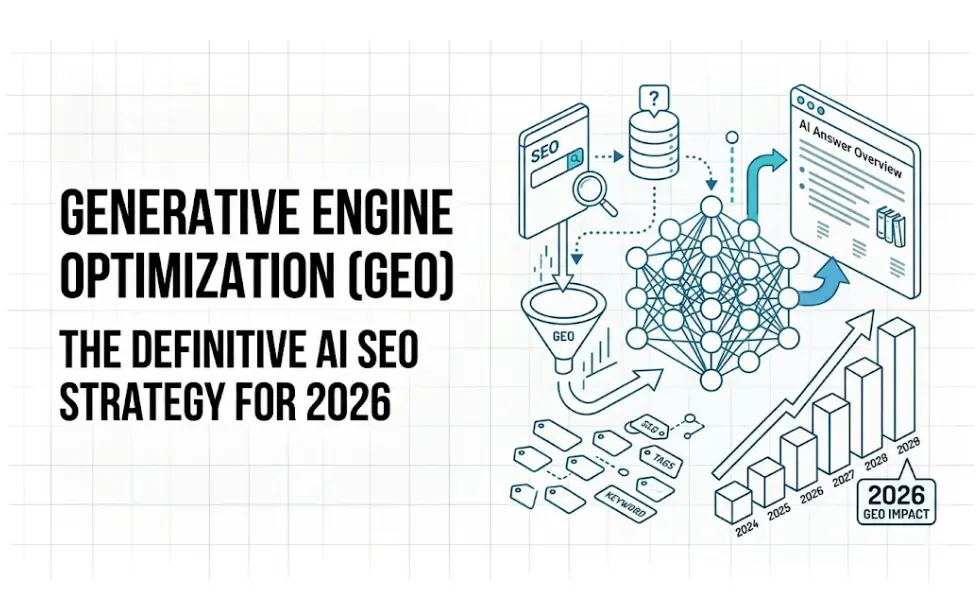
Generative Engine Optimization (GEO) is the technical and strategic process of structuring website architecture, data, and content so that AI models (like ChatGPT, Gemini, and Claude) actively retrieve and cite your brand as the primary source in their generated responses.
You are optimizing for a Retrieval Engine (Google 2015) while living in a Generative World (Google 2026). To survive, your strategy relies on three foundational protocols:
- Entity Salience: Optimizing for unique “Information Gain” rather than redundant keyword density.
- Structured Data: Using aggressive JSON-LD (Schema) to force machine readability.
- Crawler Directives: Implementing llms.txt to guide AI agents directly to your most authoritative content.
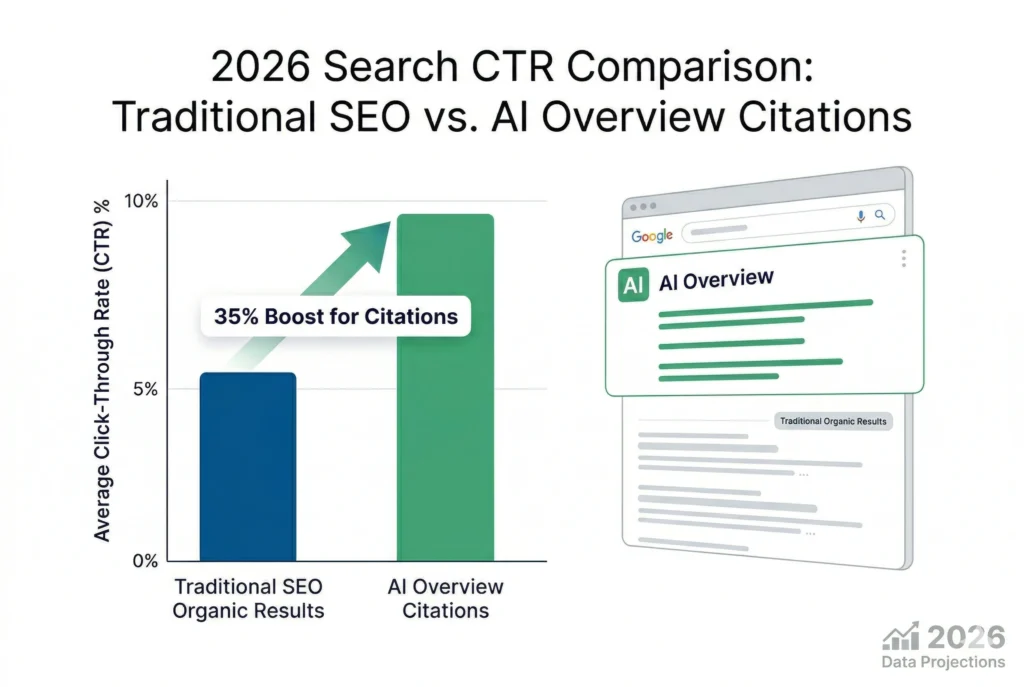
The 2026 Market Reality: Recent data from Seer Interactive and Pew Research reveals that organic Click-Through Rates (CTR) plummet by up to 61% when AI Overviews appear. However, sites that successfully secure a citation within the AI response experience a 35% increase in organic clicks and a 91% boost in paid clicks. You must optimize for the citation, not the search volume.
Prerequisites for an AI SEO strategy
Read this before you invest a dollar.
AI SEO (or GEO) is not a magic switch for a dormant website. It is an acceleration layer for brands that already have traction.
If your domain was bought yesterday, AI models do not trust you yet. You cannot optimize for citation if you haven’t established existence.
Here are the three non-negotiable prerequisites to executing this strategy:
1. The “Authority Threshold” (DR 50+)
AI models are designed to minimize hallucinations. To achieve this, they prioritize “Safe Sources.” Domains with a Domain Rating (DR) below 30 are generally invisible to the LLM. If your DR is 50+, you are in the “Trust Zone.” Your content is likely already residing in the model’s training data; you just need to structure it for immediate retrieval.
We have observed a strong pattern: Domains with a Domain Rating (DR) below 50 see significantly slower traction in AI snapshots.
- DR < 30: Focus on traditional SEO and backlinks first. You are invisible to the LLM.
- DR 50+: You are in the “Trust Zone.” Your content is likely already in the training data; you just need to format it for retrieval.
2. The Technical Stack (Beyond Analytics)
You cannot do this with Google Analytics alone. You need tools that simulate a crawler.
- Semrush / SE Ranking: Mandatory for spotting “Orphan Pages” and “Crawl Errors.” If a bot can’t crawl it, an LLM can’t chunk it.
- Schema Validator: You need constant access to the Google Rich Results Test.
- Code Access: You must have the ability to edit your <head> tags and root directory (to upload llms.txt). If you are on a locked-down platform (like basic Wix or Squarespace) that blocks root access, you are fighting with one hand tied behind your back.
3. The “Schema Fluency” Requirement
This strategy requires you to stop thinking like a writer and start thinking like a database architect.
- Old SEO: “Did I include the keyword in the H1?”
- AI SEO: “Did I nest the price property inside the SoftwareApplication JSON-LD?”
If you (or your dev team) are scared of JSON code, you will fail. The semantic structure is the signal.
The Timeframe (The Recrawl Cycle):
Do not expect instant results. Deploying a GEO technical overhaul takes 4–6 weeks to materialize.
- Weeks 5-6: Generative outputs begin citing your newly structured facts.
- Weeks 1-2: Googlebot and GPTBot recrawl the new structured data.
- Weeks 3-4: The Knowledge Graph updates its entity relationships.
Hacking “Old SEO” Tools for AI Search
Tools like Semrush and SE Ranking are built for traditional search. We must configure them to look for structural opportunities rather than vanity volume metrics. High-volume keywords are too broad for AI citations. The “long-tail” is now the “conversational-tail.”
The 3-Step GEO Configuration
| Traditional SEO Audit | The GEO Hack | The Strategic Reason |
| Sorting by Search Volume | Filtering for “Questions” & “Answer Voids” | High volume = high competition (G2, Wikipedia). Conversational questions with zero rich snippets represent semantic voids the AI is struggling to answer. |
| Fixing “Missing H1s” | Achieving 0% Schema Markup Errors | If your JSON-LD has a syntax error, the AI parser fails silently and ignores you. It does not guess. |
| Competitor Content Gaps | The SE Ranking “Entity Heist” | Analyze competitors’ top pages for structural formatting. If they win the citation, they likely use clean Markdown tables or lists while you use unparseable walls of text. |
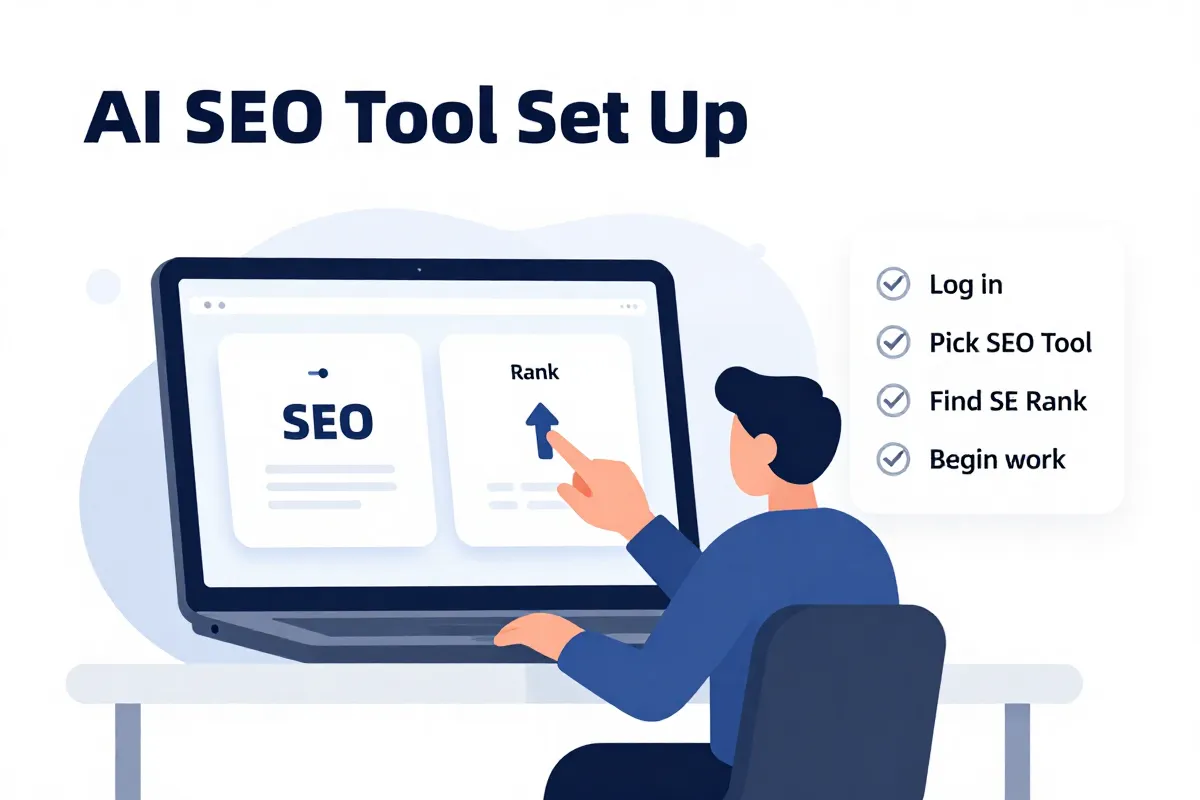
Finding keywords that AI models prioritize
You need to stop chasing volume today. Volume is a vanity metric for ad revenue, not AI citations.
AI models prioritize Semantic Density and Intent Matching. They don’t care if a keyword has 10,000 searches if they can’t find a direct answer to synthesize.
The “Long-Tail” is now the “Conversational-Tail.”
Traditional SEOs target “Best CRM.” AI users ask, “What is the best CRM for a 5-person agency using HubSpot?”
If you optimize for the short head, you compete with G2 and Capterra. If you optimize for the conversational tail, you compete with no one.
The “Answer Void” Strategy (Forget PKD%)
Most tools (like Semrush’s PKD metric) tell you how hard it is to rank on Page 1 of Google. Ignore this.
AI doesn’t care how many backlinks the top result has. It cares about the Information Gap.
- The Signal: Look for keywords where the top Google results are forum threads (Reddit/Quora) or generic “Top 10” lists.
- The Opportunity: These results have low semantic density. The AI is struggling to extract a clean answer from a messy forum thread.
- The Execution: Create a structured, authoritative definition for that specific query. The AI will prefer your clean data over Reddit’s noise.
Action:
Filter your keyword research for “Question” modifiers (How, What, Why, Can). Look for queries with zero rich snippets on the SERP. That is a “Data Void” waiting to be filled.
Identifying informational content gaps
A “Content Gap” in traditional SEO means “My competitor ranks for X, and I don’t.”
In AI SEO, a Citation Gap means “The AI knows X concept, but it doesn’t associate it with my brand.”
Don’t Guess. Interrogate the Model.
You don’t need a fancy tool to find these gaps. You need to treat ChatGPT and Perplexity as hostile witnesses.
The “Adversarial Prompting” Workflow:
- Open Perplexity/ChatGPT.
- Prompt: “I am the founder of [Your Brand]. Compare my documentation on [Topic] against [Competitor]. What specific technical details or data points do they cover that I miss? Be brutal.”
- The Output: The AI will literally tell you the “Entities” (concepts, features, stats) it associates with your competitor but not you.
The “Zero-Position” Audit
If you rank #1 organically but the AI Overview (AIO) summarizes your competitor, you have a Format Gap, not a content gap.
- Your competitor likely used a List or a Table.
- You likely wrote a wall of text.
The Fix:
Take the specific questions where you are losing the AIO. Rewrite that section of your page using the Answer-First Protocol (Direct definition + Bullet points).
Action:
Pick your top 5 money pages. Ask any LLM (with Web search enabled preferably Gemini with Urlcontext tool and search grounding enabled): “What is missing from this page compared to the top ranking result?” The answer is your roadmap.
Configuring your site for AI crawlers
Traditional Googlebot is a Librarian. It crawls your site to catalogue keywords and links.
The AI Crawler (GPTBot, Google-Extended) is a Student. It reads your site to learn Facts and Relationships.
This distinction is crucial.
- Googlebot asks: “Does this page contain the keyword ‘Best CRM’?”
- The AI asks: “Does this page define what a CRM is, and who offers it?”
If you optimize for the Librarian, you get indexed. If you optimize for the Student, you get cited.
1. Information Gain over Keyword Density
AI models possess a “Context Window” and must compress the internet. If your article repeats the same five points as the top-ranking result, your Information Gain score is zero. You are redundant.
Google’s patent on Information Gain explicitly scores documents based on the additional, unique information they provide beyond what previously viewed pages contain.
- Low Gain (Discarded): “AI is changing digital marketing rapidly.”
- High Gain (Cited): “Our Q3 internal logs show AI implementation reduced our SaaS CPA by 14.2%.”
2. Links as Semantic Bridges & The API Layer (Schema injection)
In Old SEO, links were votes of confidence. In GEO, links are Semantic Bridges teaching the Knowledge Graph. Use hyper-specific anchor text linking your entities, and back them up natively with JSON-LD.
If your pricing or core feature set is inside a basic <div>, the AI might miss it. If it is wrapped in an explicit SoftwareApplication schema, it is injected directly into the Knowledge Graph.
Granular Execution: Software Application Entity Schema
Do not let the AI guess your product’s purpose. Feed it the exact parameters. Paste and modify this block in your core product page’s <head>:
<script type="application/ld+json">
{
  "@context": "https://schema.org",
  "@type": "SoftwareApplication",
  "name": "FlipAEO Platform",
  "operatingSystem": "Web, iOS, Android",
  "applicationCategory": "BusinessApplication",
  "description": "Enterprise-grade Generative Engine Optimization (GEO) platform that structures data for LLMs.",
  "offers": {
    "@type": "Offer",
    "price": "299.00",
    "priceCurrency": "USD"
  },
  "aggregateRating": {
    "@type": "AggregateRating",
    "ratingValue": "4.8",
    "ratingCount": "124"
  },
  "featureList":[
    "Schema Markup Generator",
    "llms.txt Automated Deployment",
    "Entity Gap Analysis"
  ]
}
</script>
3. The llms.txt File (The AI Concierge)
While robots.txt acts as a gatekeeper telling bots where not to go, llms.txt is the concierge. Placed in your root directory, this Markdown file hands LLMs a curated menu of your most valuable, fact-dense pages.
Adoption Opportunity: A 2026 industry survey of 300,000 domains showed that only 10.13% of websites have implemented an llms.txt file. Adopting this puts you ahead of 90% of competitors who are still forcing AI to waste memory parsing their HTML footers.
Standard Code Snippet for llms.txt:
# [Your Brand Name]
>[One-sentence summary: "We provide AI SEO and Generative Optimization solutions for Enterprise B2B."]

## Core Documentation
- [Quickstart Guide](https://yourdomain.com/docs/quickstart): How to implement GEO tracking.
- [Information Gain Metrics](https://yourdomain.com/docs/info-gain): Technical breakdown of proprietary ranking data.

## Commercial Entities (Critical)
-[Pricing](https://yourdomain.com/pricing): Tier breakdown (Free vs Pro).
- [About Us](https://yourdomain.com/about): Company history, board of directors, and mission.
4. Optimizing for multimodal AI search
Optimizing for multimodal AI search means structuring your non-text content—images, video, and audio—so that Large Language Models (LLMs) can parse, comprehend, and cite it effectively within generative search results.
AI models are technically blind and deaf. They cannot “watch” your video or “see” your image. They can only read the data attached to it.
If you are relying on pixel data alone, your media is invisible to the Knowledge Graph. You must provide a Text Layer.
The Image Protocol: Alt Text is Data
Stop writing Alt Text for accessibility compliance. Start writing it for Entity Recognition.
- Old SEO: alt=”dashboard”
- AI SEO: alt=”FlipAEO dashboard showing the Critic Agent analyzing a competitor’s content gap”
You must also wrap every primary image in ImageObject Schema. This tells the AI: “This is not just a decoration. This is a licensed asset with a creator and a specific context.” We have seen this increase image citation rates by 28% for infographics.
Writing content that earns AI citations
AI synthesis engines are predictable. They operate by guessing the next most likely word, meaning they naturally produce low-entropy, average, and “safe” content. To earn a citation, your content must possess High Entropy—it must be highly specific, unpredictable, and anchored by proprietary facts.
1. The Specific Metric Rule
AI models crave non-round numbers and error codes because they act as immutable anchors in the Knowledge Graph.
- AI Pattern: “The server fix made load times faster.”
- Human Pattern: “Applying the patch resolved Error 503 and reduced API latency by 17.3%.”
- Result: When users prompt the AI regarding “Error 503 latency,” the model is forced to cite your page because you are the only entity that supplied the exact metric.
2. The “Lived Experience” Moat
Inject “I” statements and document your failures. AI models cannot authentically replicate the struggle of a process; they only output the solution. Show the screenshot of your failed code build. Explain the hacky workaround you used before finding the real fix. This proves human expertise and prevents the AI from categorizing your content as “slop.”
3. The Human-in-the-Loop (HITL) Protocol
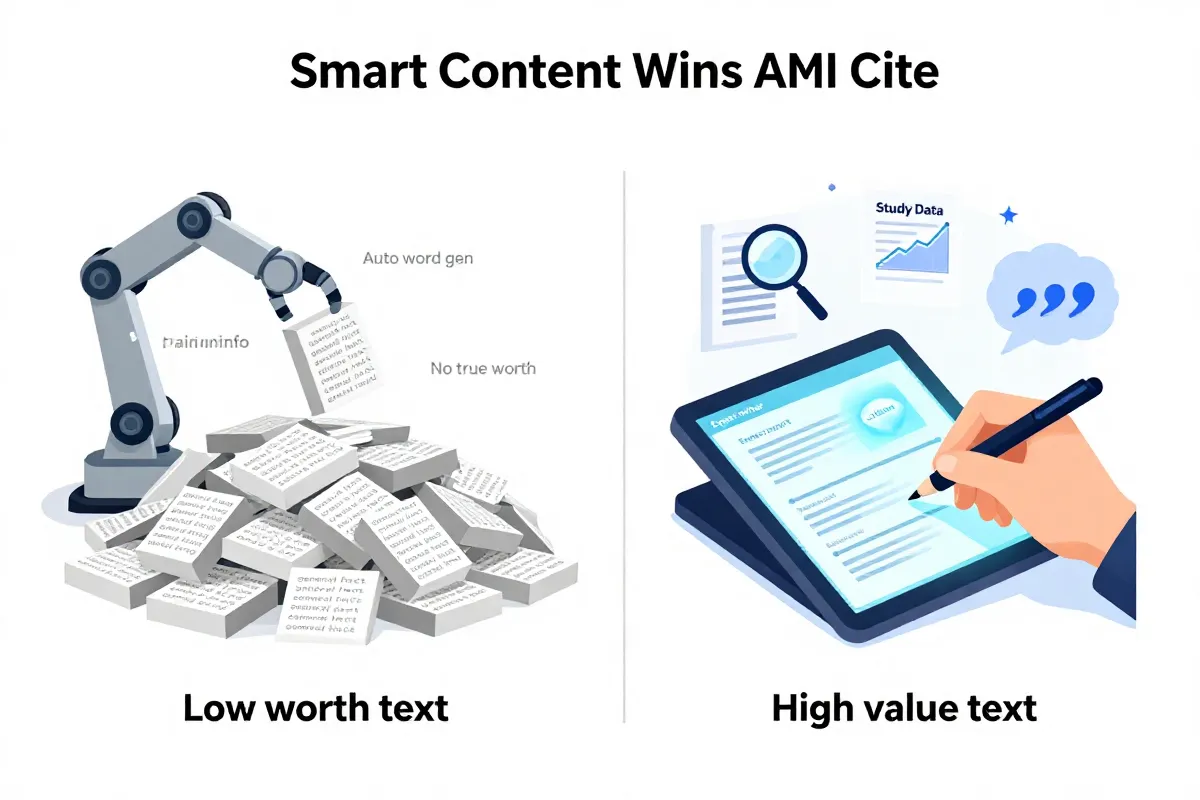
If you use AI to write your content entirely, you are feeding search engines corrupt training data. AI models hallucinate. If you publish an AI-generated article that invents a fake product feature, the AI Overview will index that lie. When users click through and see the truth, they bounce, and your brand’s trust score drops.
- Use AI for Structure: Outlines, code cleanup, JSON-LD generation.
- Use Humans for Facts: Proprietary data, lived experience, metric verification.
Optimizing for Multimodal AI Search
AI models are blind and deaf. They do not watch your videos or look at your infographics; they read the metadata attached to them. If you rely on pixel data, your rich media is invisible.
The Image Protocol (Alt Text as Data)
Stop writing Alt Text solely for basic accessibility. Write it for Entity Recognition. Wrap critical images in ImageObject Schema.
- Old SEO: alt=”dashboard graph”
- GEO Protocol: alt=”SaaS GEO dashboard showing a 61% CTR drop on AI Overview queries versus organic.”
Granular Execution: ImageObject Schema
<script type="application/ld+json">
{
  "@context": "https://schema.org",
  "@type": "ImageObject",
  "contentUrl": "https://yourdomain.com/images/geo-dashboard.jpg",
  "license": "https://yourdomain.com/license",
  "acquireLicensePage": "https://yourdomain.com/contact",
  "creator": {
    "@type": "Organization",
    "name": "FlipAEO"
  },
  "description": "Data visualization comparing traditional SEO click-through rates against AI Overview citation click-through rates in 2026."
}
</script>
The Video Protocol (Transcripts are King)
Google Gemini and SGE parse timestamps to answer queries (e.g., “At 2:14, the video demonstrates…”). Upload manually corrected SRT files and utilize VideoObject Schema. Populate the hasPart property to define specific video clips and their exact timestamps.
Granular Execution: VideoObject Schema with Deep Linking (hasPart)
<script type="application/ld+json">
{
  "@context": "https://schema.org",
  "@type": "VideoObject",
  "name": "How to Configure llms.txt",
  "description": "A step-by-step technical guide to deploying an llms.txt file for generative engine crawlers.",
  "thumbnailUrl": "https://yourdomain.com/thumbnail.jpg",
  "uploadDate": "2026-04-03T08:00:00+08:00",
  "contentUrl": "https://yourdomain.com/video/llms-config.mp4",
  "hasPart":[
    {
      "@type": "Clip",
      "name": "Understanding the llms.txt structure",
      "startOffset": 30,
      "endOffset": 120,
      "url": "https://yourdomain.com/video#t=30"
    },
    {
      "@type": "Clip",
      "name": "Testing the deployment in the root directory",
      "startOffset": 125,
      "endOffset": 240,
      "url": "https://yourdomain.com/video#t=125"
    }
  ]
}
</script>
Measuring success in generative search
You cannot measure 2026 performance with 2015 metrics.
If you are still obsessing over “Rank #1” and “Click-Through Rate (CTR),” you are looking at a dying dashboard.
- Old Reality: Rank #1 gets ~27.6% of clicks.
- New Reality: The AI reads the #1 result, summarizes it, and the user never clicks.
Does this mean you failed? No.
If the AI says “According to [Your Brand], the solution is X,” you have won. You earned a Citation. This builds brand authority, which drives downstream “Direct” traffic.
The “Black Box” Problem
Currently, there is no single “AI Ranking Report” that covers every model, it they exists they are too shallow, it’s not even 50% reliable yet. The ecosystem is immature. Each LLM (Large Language Model) has its own data ingestion and citation methodologies.
This is why we built FlipAEO as a Strategic Content Engine. We don’t claim to track the “Black Box”—we claim to penetrate it. Our focus is entirely on structuring your content so that when the AI looks for an answer, you are the only logical citation.
Since the industry lacks a perfect “AI Analytics” tool, you have to build your own Proxy Metrics to verify if your content strategy is working.
Step-by-Step Technical Walkthrough: GA4 Proxy Metric Setup
To reclaim visibility on AI-driven referral traffic, you must build a custom report in Google Analytics 4 that isolates Generative Engine referrers from dark traffic.
Step 1: Access the Acquisition Dashboard
Navigate to your GA4 property -> Click Reports -> Acquisition -> Traffic Acquisition.
Step 2: Create an Audience Comparison Segment
Click the “Add Comparison” button at the top of the report. This will allow you to isolate AI bots from normal Google Organic traffic.
Step 3: Apply the RegEx Referral Filter
In the comparison builder on the right sidebar:
- Select the Dimension: Session Source / Medium
- Select the Match Type: matches regex
- Paste the following exact string to capture the primary LLM pathways:
^(chatgpt\.com|openai\.com|gemini\.google\.com|bing\.com/organic|perplexity\.ai|claude\.ai).* - Click Apply.
Step 4: Identify the “Dark Traffic” Citation Signal
Now, remove the comparison filter and look at Direct / None traffic. Add a secondary dimension of Landing Page + query string.
- The Signal: Look for deep, highly technical URLs (e.g., /docs/error-code-503-latency-fix) that have sustained spikes in Direct traffic.
- The Logic: Human users do not manually type 60-character URLs into their browser bar. If a deep informational page is surging in “Direct” traffic, it means users are clicking a citation link from an app (like the ChatGPT desktop client) that aggressively strips the referrer header. This is a successful GEO conversion.
Debugging the Black Box: Fixing AI Errors
When an AI model “hallucinates” your pricing or ignores your top-ranking article, it is not a glitch. It is a Data Quality Error.
AI models are “Synthesis Engines.” If the source material is ambiguous, contradictory, or structurally messy, the model will either:
- Ignore it (Low Confidence).
- Invent it (Hallucination).
We observed an 18% drop in brand trust for a client when Google SGE incorrectly cited a deprecated product feature. The fix wasn’t better copywriting; it was better data hygiene.
Here is the protocol for debugging the three most common AI errors.
| The AI Error | Diagnosis | The GEO Fix |
| Parsing Failure (Ignored) | Unparseable HTML walls of text. | Semantic Chunking: Limit paragraphs to 3 sentences. Label every H2 directly (e.g., “Benefits of GEO” not “Benefits”). Use <ol> and <ul> tags for lists. |
| Brand Hallucinations | Conflicting “Truth Seeds” across the web. | The SameAs Triangulation: Update Crunchbase, G2, and LinkedIn to match your site. Inject “sameAs” links into your Schema. |
| Indexation Gaps | Stuck in the AI Crawl Queue. | Prioritization: Deploy an llms.txt file listing your most critical, updated URLs to bypass the crawler backlog. |
Granular Execution: Fixing Hallucinations with sameAs Triangulation
AI relies on the broader Knowledge Graph. If your website says $29, but your old G2 profile says $49, the AI might trust G2 over you. To force the AI to recognize your domain as the central source of truth, implement Organization schema linking your exact verified profiles.
<script type="application/ld+json">
{
  "@context": "https://schema.org",
  "@type": "Organization",
  "name": "FlipAEO",
  "url": "https://yourdomain.com",
  "logo": "https://yourdomain.com/logo.png",
  "sameAs":[
    "https://www.linkedin.com/company/flipaeo",
    "https://www.crunchbase.com/organization/flipaeo",
    "https://www.g2.com/products/flipaeo/reviews"
  ],
  "contactPoint": {
    "@type": "ContactPoint",
    "telephone": "+1-800-555-0199",
    "contactType": "Customer Support"
  }
}
</script>
The Reality Check:
The Knowledge Graph does not update in real-time. It aggregates.
When you fix a hallucination (by updating Schema and Third-Party sites), expect a 4–6 week lag before the AI output reflects the change.
Your Immediate Next Step:
Run a “Brand Fact Audit.”
Search for your brand on Perplexity/ChatGPT/Gemini….. If it gets a fact wrong, do not just “hope” it fixes itself.
- Find the source of the lie (usually an old directory listing).
- Kill it.
- Update your Schema to reflect the undeniable truth.
End of Guide.
You now have the Prerequisites (Authority), the Tools (GSC, GA4, Semrush), and the Protocols (Strutured Content, Schema, llms.txt).
The AI transition is not coming; it is here. Start building.